Why Energy Transition Discourse Needs A Dose Of Realism
Gaurav Sharma, Senior Contributor. Gaurav Sharma is a London-based analyst who covers energy & ESG.
Dec 06, 2025, 06:51am EST

There is growing, even if reluctant, consensus among many experts that the world’s ongoing energy transition, its associated costs, plans, and targets could all do with a heavy dose of realism.
An uncertain macroeconomic climate and a noticeable political blowback against green initiatives in several countries has also knocked the transition trajectory. While BloombergNEF projects the required energy transition investment level to be $5.6 trillion each year from 2025 to 2030, finance is in fact returning unabated to traditional energy if not totally retreating from the green space.
And the spectacular collapse of the Net Zero Banking Alliance in October marked another low point for those seeking to finance the shift from fossil to green fuels. The NZBA counted nearly 150 global banks among its ranks since its founding in 2021. However, mass departures of banks earlier this year dwindled its relevance and ultimately led to its demise.
Major energy companies have also either pulled back or curtailed their green investments, and are placing a renewed overt emphasis on boosting hydrocarbon exploration and revenue.
The topic of tackling the transition took center-stage at the recently concluded Duke of Edinburgh Future Energy Conference in London, U.K., organized by The Worshipful Company of Fuellers, one of the historic livery companies of the City of London, now associated with the whole energy sector.
Interspersed with discussions on renewable energy, oil and gas, hydrogen, geothermal and emerging climate technology solutions, concerns were expressed at the event both about the speed as well as costs and actual efficacy of the transition solutions being proposed.

By Piero Cingari
Published on 09/12/2025 - 7:00 GMT+1
Gold soared over 60% in 2025, driven by geopolitical risks, rate cuts, and central bank demand. Many experts see further upside in 2026, with gold's role as a safe-haven asset still firmly intact.
After a historic 2025 that saw gold soar over 60% and break more than 50 record highs, investors are now turning their attention to whether the precious metal can sustain its upward trajectory into 2026.
Despite leading major asset classes in year-to-date performance, putting it on track for its best year since 1979, experts think gold may still have room to climb next year. Others warn that risks remain.
Unlike previous years when single events dominated gold’s trajectory, this year saw multiple drivers at play.
Sustained central bank buying, persistent geopolitical friction, elevated trade uncertainty, lower interest rates, and a weakening US dollar all combined to fuel demand for the metal as a safe-haven asset.
According to the World Gold Council’s latest report, geopolitical tensions contributed roughly 12 percentage points to year-to-date performance, while dollar weakness and slightly lower interest rates added another 10. Momentum and investor positioning accounted for nine points, with economic expansion contributing a further 10.
Central banks also continued to buy aggressively, keeping official-sector demand well above pre-pandemic norms.
Forecasts from the World Gold Council
Looking ahead, the Council expects many of the forces that powered gold’s extraordinary rally in 2025 to remain relevant in 2026.
However, the starting point is now fundamentally different. Unlike at the beginning of 2025, gold prices have already priced in what the WGC describes as the “macro consensus”. That's expectations of stable global growth, moderate US rate cuts, and a broadly steady dollar.
In this environment, the Council notes that gold appears fairly valued. Real interest rates are no longer falling significantly, opportunity costs are neutral, and the strong positive momentum seen in 2025 has begun to fade.
Investor risk appetite remains balanced, rather than tilting decisively toward caution or exuberance.
As a result, in its baseline scenario, the WGC sees gold trading within a narrow range in 2026, with performance likely limited to between –5% and +5%.
But the outlook is far from settled, as three alternative scenarios could shape a different path.
In a "shallow economic slip" — characterised by softer economic growth and additional Fed rate cuts — gold could rise by 5% to 15% as investors shift toward defensive assets, extending the gains of 2025.
In a deeper economic downturn, or "doom loop," gold could rally by 15% to 30%, fuelled by more aggressive monetary easing, declining Treasury yields, and strong safe-haven flows.
Conversely, if the Trump administration’s policies succeed in reigniting growth, a reflation return would likely push yields and the dollar higher, diminishing gold’s appeal.
Under this bearish scenario, gold could decline by 5% to 20%, particularly if investor positioning reverses and central bank demand weakens.
Predictions from Wall Street
Despite a more measured outlook from the WGC, major investment banks continue to predict further upside for gold in 2026.
J.P. Morgan Private Bank projects prices could reach between $5,200 and $5,300 per ounce, citing strong and sustained demand as a key driver.
Goldman Sachs forecasts gold at around $4,900 per ounce by the end of next year, supported by continued central bank buying.
Deutsche Bank offers a wide range of $3,950 to $4,950, with a base case near $4,450, while Morgan Stanley anticipates prices closer to $4,500, although it warns of near-term volatility.
Supporting this optimism is the ongoing accumulation of gold by central banks, particularly in emerging markets, as well as the view that many institutional investors remain underexposed to the metal.
The potential for lower real yields, coupled with global macro risks, continues to make gold attractive as a portfolio hedge.
Nonetheless, risks could cap further gains. A stronger-than-expected US recovery or a rebound in inflation could force the Federal Reserve to delay or reverse rate cuts, boosting real yields and the dollar, two classic headwinds for gold.
A slowdown in ETF flows or central bank purchases could also dampen demand, while increased recycling, particularly in India where gold is used as collateral, could raise supply and weigh on prices.
A constructive path forward
While a repeat of 2025’s extraordinary 60% surge appears unlikely, gold enters 2026 on solid footing.
The fundamental drivers such as macroeconomic uncertainty, central bank diversification, and gold’s role as a hedge against volatility remain intact.
In a world increasingly defined by unpredictability, gold continues to offer investors not just returns, but resilience. The metal may no longer be in the early stages of a rally, but its role as a strategic anchor in uncertain times is far from diminished.
09 Dec, 2025 By Thomas Johnson
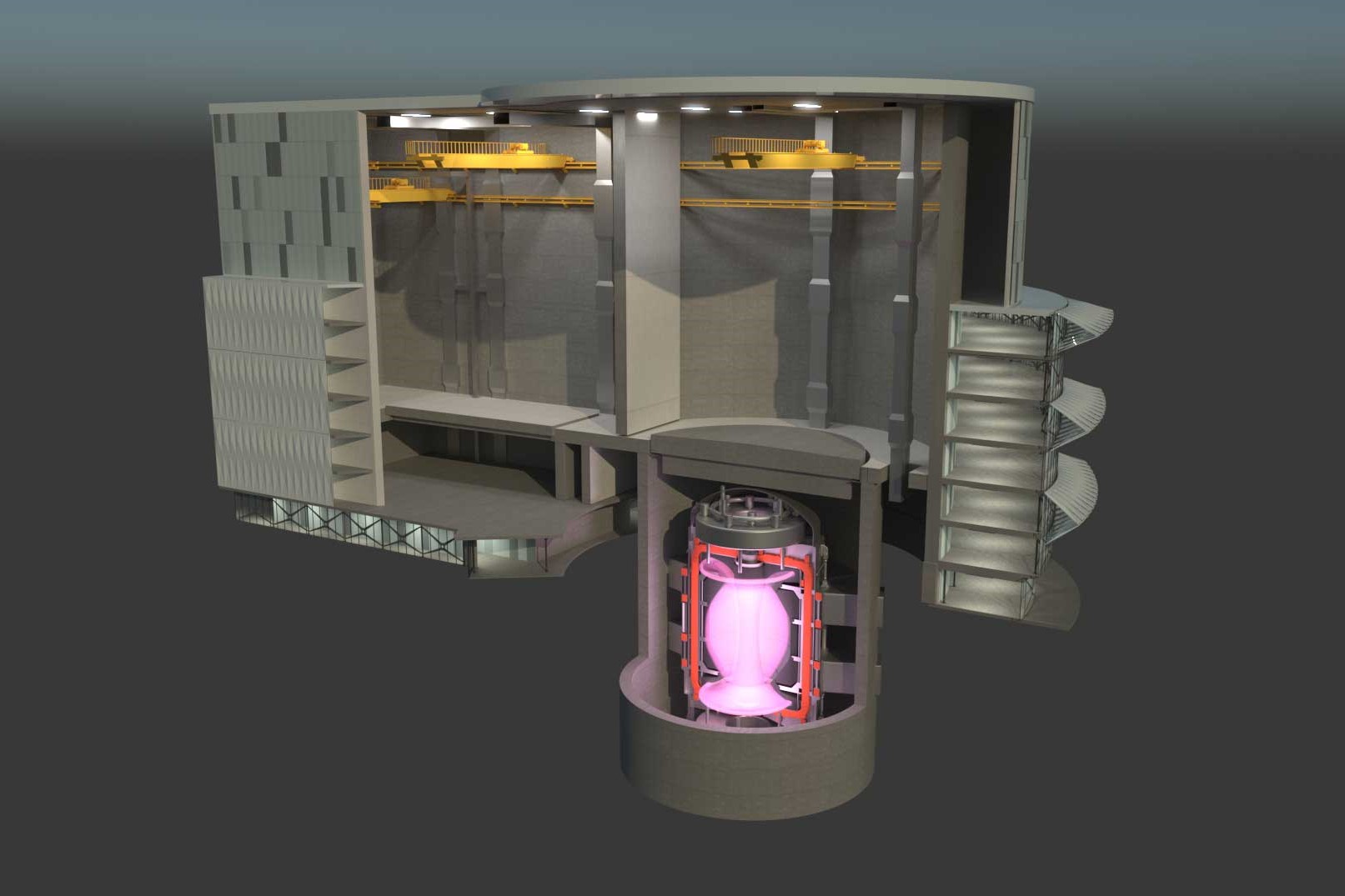
The procurement for an engineering partner to construct the UK’s Spherical Tokamak for Energy Production (Step) fusion power plant will resume “in a year or two” after a failed first attempt, but the choice of a construction partner is imminent.
UK Industrial Fusion Solutions (UKIFS), a subsidiary of the UK Atomic Energy Authority (UKAEA), is leading a public-private partnership to design, build and operate the Step plant. The plant is slated for construction at a West Burton site in Nottinghamshire, chosen for its existing infrastructure (being an ex-coal fired power station) and support from the community for renewed energy generation opportunities.
The government launched a competition to select engineering and construction partners for the prototype fusion energy plant in Nottinghamshire in May last year, with the contracts rumoured to be worth close to £10bn. Then in January, the shortlist for both partners was revealed.
The shortlisted organisations for Step’s engineering partner were:
Engineering procurement hits the wall
Despite announcing the two-consortia shortlist, the project recently divulged that the process of selecting the engineering partner had broken down, with the approach being taken as being deemed “not suitable”.
A statement said: “In the case of the construction partner bidders, the base requirements were understood and UKIFS had confidence that one or more of the bidders’ could meet those requirements. The construction partner procurement will continue to be delivered and is intended to be awarded in line with the expected timescales.
“However, in the case of the engineering partner bidder, it was concluded that the proposed approach was not suitable to take forward at this time.
“The engineering partner element of this procurement process will therefore not proceed to a call for final tenders, and instead UKIFS will procure this capability through other means, primarily through direct engagement with the market.”
Speaking at the Nuclear Industry Association (NIA) annual conference on 4 December, UKIFS chief executive Paul Methven stated procurement for the engineering partner would resume “in a year or two”.
“We’re nearing the final stages of selecting our construction partner in what I have to say has been a really excellent competition,” he said. He said that despite the failed first attempt at procurement, UKIFS will “return to that in a year or two because large scale integration capability is essential for this”.
“In the near term we’re focusing on securing specific support on detailed systems and we’ll have a pipeline of packages coming to market,” he continued. “We’ll be rolling out a pipeline of engineering packages with, hopefully, a significant announcement in March.”
Construction moves ahead
Despite the stumble in procuring an engineering partner, procurement for a construction partner on an equally lucrative deal is on track for decision in the coming months.
The shortlisted organisations for the construction partner are:
The chosen partner is expected to be selected sometime early next year before work on site begins in April.
Methven said: “West Burton operations will move forward really significantly from April, so when our construction partner arrives, we have to be on contract by then to get stuck in into early works.”
Other upcoming movement for the proposed construction of a prototype fusion plant include the launch of Step’s non-statutory public consultation which is due in January and also the Department for Energy Security and Net Zero (DESNZ) is due to update its fusion strategy in March.
Construction of the prototype plant is projected to be completed by 2040.
Trafigura Warns of “Super Glut” as Oil Supply Surges
By ZeroHedge - Dec 10, 2025, 9:00 AM CST

Echoing what has become a now daily refrain by commodity bears everywhere, Saad Rahim, chief economist of commodity-trading giant, Trafigura, said that the oil market faces a “super glut” next year as a burst of new supply collides with weakness in the global economy. According to Rahim, new drilling projects and slowing demand growth would weigh further on already depressed crude prices next year.
“Whether it’s a glut, or a super glut, it’s hard to get away from that,” Rahim said in remarks alongside the company’s annual results.
Brent crude has fallen 16% this year, on track for its worst year since 2020. Prices are expected to be further damped by major projects coming online next year, including in Brazil and Guyana.
The glut thesis is hardly new, and has been popularized by banks such as Citi and Goldman for the past year. As Goldman analyst Daan Struyven wrote in his latest oil tracker note, "global visible oil stocks have built by nearly 2mb/d over the past 30 days." The banks expects them to grow significantly more in the coming years.
Meanwhile, demand from China, which is widely seen as aggressively stocking its strategic petroleum reserve by 500kb/d (and as much as 1 mm/d according to some estimates) and is the world’s biggest oil importer, is expected to grow more slowly next year due to its huge fleet of electric vehicles, which have sharply reduced petrol demand. Low prices this year have prompted China to buy more crude to fill its strategic stockpile.
“China needs to keep buying at this rate, for that super glut to not show up even earlier,” Rahim added.
The US government has also been trying to keep oil prices low, and President Donald Trump has pledged to “drill, baby, drill” in a push to increase American production. There has also been speculation that the US will also refill its SPR which was largely emptied by Biden but since that will promptly drive prices higher, so far this has been nothing but speculation, and meanwhile the US barely has any reserves for a true emergency.
Ben Luckock, head of oil trading at Trafigura, said in October that he expected oil prices could fall below $60 a barrel before rallying. “I suspect we’ll go into the $50s at some point across Christmas and the new year,” he said at the time.
According to the FT, Trafigura reported net profits of $2.7bn during the fiscal year that ended in September, down slightly from $2.8bn the previous year, and a five-year low after years of bumper profits linked to Russia’s full invasion of Ukraine when most commodity traders were breaching sanctions and making a killing in the process.
Its non-ferrous metals trading division reported a record year, due in part to the profits made by shipping copper into the US amid the disruptions caused by whipsawing tariff rules, according to people familiar with the matter.
Trafigura CEO Richard Holtum said “significant headline-driven volatility” had been a major driver for markets this year and that the trend would continue in 2026.
“Trading conditions were not easy last year and our trading team put on a really credible performance across all divisions,” said Holtum.
However, the small drop in profits, combined with rising payouts to Trafigura’s employee-shareholders, meant group equity fell slightly, to $16.2bn, from $16.3bn the previous year, marking the first time this figure has shrunk since 2018.
Payouts to Trafigura’s employees rose to $2.9bn, up from $2bn during the prior year. The company, whose top management is based in Geneva, pays out “dividends” to its employee-shareholders, including by buying back the shares of departing employees over time.
By Zerohedge
https://oilprice.com/Energy/Energy-General/Trafigura-Warns-of-Super-Glut-as-Oil-Supply-Surges.html
Algeria is at a strategic turning point in its economic history, as the country seeks to reduce its dependence on hydrocarbons and build more diversified and sustainable growth. In this context, the mining sector is poised to play a leading role, with the emergence of large-scale, transformative projects capable of reshaping the national production structure. These initiatives are part of a long-term vision aimed at strengthening the country’s sovereignty, developing local industrialization, and creating more skilled jobs.
Focus on Economic Diversification
Algerian authorities present these three projects as the core of their new diversification strategy, directly linking them to the objectives of industrial and agricultural sovereignty and the growth of non-hydrocarbon exports. The government emphasizes the creation of local value through the on-site processing of minerals, in order to replace costly imports and generate foreign currency earnings on international markets.
Gara Djebilet: A Pillar of the Steel Industry
The Gara Djebilet iron ore mine, already in its initial phase of operation, is expected to gradually supply the national steel industry and reduce raw material imports, estimated at several billion dollars annually. By 2030, the associated infrastructure will have a capacity of several million tons of iron ore concentrate and pellets per year, paving the way for Algeria’s greater integration into global metallurgical value chains.
Bled El Hadba: The Fertilizer Bet
The Integrated Phosphate Project, centered on the Bled El Hadba mine in eastern Algeria, aims to produce several million tons of raw phosphate per year and significant volumes of fertilizers for the local market and for export. This complex is presented as a turning point for self-sufficiency in fertilizers and the support of new agricultural areas, with potential revenues in the order of several billion dollars annually and tens of thousands of direct and indirect jobs.
Oued Amizour: Zinc, Lead, and Local Industries
The Oued Amizour-Tala Hamza zinc and lead mine, in the Béjaïa region, is expected to produce hundreds of thousands of tons of zinc and tens of thousands of tons of lead each year. This production is intended to supply local industries (metallurgy, batteries, materials) while generating an exportable surplus, strengthening Algeria’s position in African and Mediterranean markets.
Expected Benefits and Challenges to Monitor
Taken together, these three mega-projects are designed as structuring drivers of growth, thanks to the scale of the investments, the announced jobs, and the projected foreign exchange earnings. Their success will, however, depend on the ability to meet deadlines, secure infrastructure (rail, energy, water) and manage environmental impacts, conditions necessary for economic diversification to be sustainable.
https://www.capmad.com/mining-en/three-mega-mining-projects-are-reshaping-algerias-national-economy/
By Michael Kern - Dec 07, 2025, 4:30 PM CST

The stock market is hitting record highs. GDP growth is in the green. Tech valuations are defying gravity... fueled by a promise that artificial intelligence is going to generate trillions of dollars in wealth.
And yet... everything feels kinda…terrible?
Jobs are disappearing, not in a crash, but in a slow fade. Prices for essentials remain stubbornly high. The divide between the digital economy and physical reality has never been wider.
We are told this is just a transition period. We are told that "efficiency" is messy... but necessary.
But the unease you feel isn’t irrational. The green arrows on the stock charts aren't measuring the health of the everyday economy anymore. They are measuring the success of a takeover.
We are watching a fundamental shift in how the state operates. Sovereignty is shifting from public institutions to a network of private entities. And in many ways, we are holding the door open for them.
When Silicon Valley Bought the State
For years, we talked about the "revolving door" between business and government.
The idea was that regulators would leave office and take cushy jobs at the companies they used to police. It was a conflict of interest... but one we understood.
That metaphor doesn't really fit anymore. This is more like a merger.
A specific network of billionaires and venture capitalists has moved beyond lobbying. They are now building the state infrastructure themselves.
They don't want to influence the rules. They want to be the ones writing the code that executes the rules.
Look at the players involved...
These aren't just businessmen. They are state-builders.
And they’ve spent the last decade funding a pipeline of personnel to place into key government positions.
Thiel’s former chief of staff, Michael Kratsios, directed the White House Office of Science and Technology Policy.
An executive from Anduril, a defense contractor backed by Thiel’s Founders Fund, was nominated as Army under-secretary while still holding up to $1 million in company stock.
This pipeline has paid off. In late 2024 and 2025, we saw a massive consolidation of federal power into private hands.
They have realized that the most profitable business model isn't just selling products to consumers. It is offering "governance as a service."
We look at this efficiency and applaud it. But it raises a difficult question: When a private company runs the software that powers the state, who is actually in charge?
Abundance for Them, Scarcity for You
This new system requires fuel. A lot of it.
The leaders of this shift love to talk about "abundance." Listen to Sam Altman or other AI evangelists, and they will tell you we are on the verge of a "fusion utopia." They promise that AI will eventually solve climate change and give us limitless, clean energy.
That is the sales pitch. And maybe, one day, it will be true. But the reality today is a story of immediate resource pressure.
To power the massive data centers required for their AI models, these companies are tapping into the American energy grid at an unprecedented scale.
According to the International Energy Agency (IEA), power consumption from data centers is projected to more than double... rising from 415 terawatt-hours in 2024 to 945 TWh by 2030.
To put that in perspective... that is roughly the equivalent of adding the entire electricity consumption of Japan to the global grid in just six years.
Where will this power come from?
Not from the magic fusion reactors of the future. It is coming from the grid you rely on today.
In the PJM electricity market, which covers 13 states from Illinois to New Jersey, the demand from data centers has already driven capacity prices up.
To meet this need, the government is pivoting. The Department of Energy is increasingly financing coal and natural gas expansion to keep the servers humming.
It creates a difficult dynamic:
It isn't necessarily malicious…It’s just math. But the math ends with the public paying higher bills to subsidize yet another part of the AI boom.
How "Efficiency" Is Deleting the Middle Class
This shift isn't just happening on your electric bill. It is happening in the workplace.
The stock market is rallying on the promise of "efficiency." And let's be honest, technology does make things more efficient. But for the workforce, "efficiency" often looks like a closing door.
We often look at headline-grabbing layoff numbers. And they are significant. In the first few months of 2025 alone, over 126,000 tech workers lost their jobs, according to Crunchbase.
But the bigger story is what happens after the layoff.
It is a phenomenon called "silent firing."
Companies aren't just letting people go. They are simply... not hiring replacements. When a worker leaves, the role is dissolved, or the tasks are handed over to software.
According to a report by Zety and Allwork, 73% of workers reported experiencing "quiet firing" tactics in 2025... where support is withdrawn and roles are made redundant without a formal announcement.
The entry-level jobs are being automated first. If you are a junior analyst, a copywriter, or a coder fresh out of college... the job you would have taken five years ago is harder to find.
This flattens the middle class. It creates a gap where new careers should be. And the industry leaders know this is happening.
The Trap of Outsourcing Global Sovereignty
This isn't just an American dynamic. This new model of "privatized sovereignty" is being exported globally.
Europe, for example, talks a lot about "Digital Sovereignty."
They want to be independent. But building your own tech stack is expensive and slow.
A report by the Centre for European Policy Analysis (CEPA) estimates that achieving true digital independence would cost Europe €3.6 trillion.
Most nations aren't willing…or able…to pay that bill. So, they sign contracts.
74% of publicly listed European companies now depend entirely on U.S. tech stacks.
Look at the United Kingdom.
The NHS signed a £330 million deal with Palantir to build its data platform. It’s efficient. It works. But it means a U.S. company now manages the health data of the British public.
Look at Ukraine. Their defense relies heavily on Starlink. It has saved countless lives. But it also means their military communications rely on the goodwill of a single American company.
It is a trade-off. These nations get the best technology in the world. But they become 'client states' in the process. You cannot have a truly independent foreign policy when your defense infrastructure is leased from a company in California.
And if a G7 nation can be reduced to a client state, the individual American worker doesn't stand a chance.
The architects know this. That is why they have prepared a specific 'safety net' for the people they intend to make obsolete.
UBI Is a Trojan Horse
We need to talk about the "safety net" the architects are promising us.
Every tech billionaire has the same talking point: AI is going to take all the jobs, so we will need Universal Basic Income (UBI).
It sounds generous. It sounds inevitable. But if you look at their actions, it looks less like a safety net and more like a trap. While they preach UBI in the future, they are actively dismantling the machinery required to fund it in the present.
Elon Musk frequently claims that UBI will be "necessary" in an AI future. Yet, he lead the Department of Government Efficiency (DOGE), an initiative explicitly designed to slash federal spending by trillions.
You cannot have it both ways.
You cannot gut the federal budget, fire the administrators, dismantle the tax collection agency (IRS), and then claim you are going to distribute a monthly check to 330 million Americans.
And it’s not like he’s going to give away his own money, either.
He recently stated: "The biggest challenge I find with my foundation is trying to give money away in a way that is truly beneficial to people."
He is literally telling us that he finds philanthropy "too difficult." If he can't figure out how to give away his own money, why should we trust him to build a system to give away the nation's money?
Sam Altman, the CEO of OpenAI, advocates for a "Moore's Law for Everything," where we tax capital to fund a citizen's dividend.
But his actual product, Worldcoin, reveals the true business model.
Worldcoin doesn't give you a dividend as a right of citizenship; it gives you a crypto token in exchange for scanning your iris. It creates a proprietary database of human biometrics owned by a private company.
This is a customer acquisition strategy. He wants to build a user base, not a social safety net.
And for figures like Peter Thiel, UBI isn't even meant to help the poor. They aim to delete the government.
UBI is the severance package for the "nanny state." The deal is simple: cut every citizen a check, and in exchange, eliminate Social Security, Medicare, and public infrastructure.
It sounds like freedom, but it is a bad trade.
Even if the check is large, it cannot replace the leverage of the state.
The government negotiates wholesale prices for healthcare and runs transit at a loss for the public good.
If you replace those systems with cash, you force individuals to buy "retail" in a market that knows exactly how much money they just received.
You are trading a durable right to services for a volatile subscription to them. And as any Netflix user knows, the price of the subscription always goes up.
Auditing the Myth of the "Self-Made" Empire
Before we talk about solutions, we have to look at the receipts. We need to audit the myth of the "self-made" techno-oligarch.
The narrative they sell is one of libertarian genius…that they built these empires in a garage, fighting against the heavy hand of the state.
The reality is that the state was their angel investor.
We…were their angel investor.
On top of the direct cash, the founders and CEOs have benefited from a tax code designed to let them hoard it.
The 2017 tax cuts slashed the corporate rate from 35% to 21%, and loopholes allow them to borrow against their stock holdings to live tax-free, while the average worker pays income tax on every paycheck.
Then there is the hidden subsidy: resource extraction.
When a data center drains a local aquifer to cool its servers, forcing the local town to upgrade its water treatment plant... the town pays for that upgrade. The company gets the cooling; the public pays the bill.
But it isn't just water. It is the air itself.
Despite the 'net-zero' press releases, the dirty secret of the AI boom is diesel.
To guarantee 99.999% reliability, these facilities rely on banks of massive generators.
In some counties, data centers are permitted to burn enough fuel to rival a major airport, pumping exhaust into local lungs to ensure a chatbot in California never lags.
And it is the noise.
These things are massive, concrete fortresses emitting a constant, low-frequency roar—a mechanical drone that penetrates walls and disrupts sleep for miles. It is the sound of local quality of life being liquidated for uptime.
Then there is the infrastructure bill.
The enormous power draw requires billions in new transmission lines. But the tech companies often aren't the ones paying for those upgrades…you are.
We have socialized the risks, the infrastructure costs, and the pollution, but privatized the profits, the intellectual property, and the control.
Demanding a Return on Our Investment
So... where do we go from here?
The old social contract was simple: Corporations make money, and in return, they provide jobs.
That contract is void.
They are building systems explicitly designed to remove the need for jobs.
The "Return on Investment" for the public is no longer employment. And it certainly isn't UBI, which remains a distant fantasy while the tax base to pay for it is eroded.
If the public is going to put up the capital, and deal with the consequences of ballooning energy and resource use, the public should see a return.
We need a new model for ROI.
The Sovereign Equity Model
In the venture capital world, if an investor puts up the money to de-risk a technology, they get equity. They get a seat on the board. They get a share of the upside.
Yet, when the U.S. taxpayer does it, we call it a "subsidy."
The CHIPS Act alone funneled $52 billion into semiconductor manufacturing…
While the taxpayers who funded this got nothing but the bill.
This is bad business.
We need to adopt a Sovereign Equity Model.
If a company wants a government loan, a tax credit, or a guaranteed energy contract, the government should take equity warrants in return. This isn't radical socialism… It’s basic capitalism.
It is exactly what Warren Buffett did when he bailed out the banks in 2008. He didn't give them free money…he bought warrants that eventually made Berkshire Hathaway billions.
We already have a successful blueprint for this in the Alaska Permanent Fund.
Since 1976, the state of Alaska has treated its oil reserves not as private bounty, but as a shared asset. When the oil flows, a portion of the revenue is deposited into a sovereign wealth fund, which then pays out an annual dividend to every resident.
We should treat our digital and energy infrastructure the same way.
The profits from these government-backed equity stakes shouldn't disappear into the black hole of the general budget; they should flow into a ring-fenced National Wealth Fund that pays dividends directly to the citizenry.
If the American people are taking the risk, we should own the upside.
Tax the Robots to Save the Tax Base
The U.S. tax code is currently rigged to favor machines over people.
If you hire a human, you pay payroll taxes, social security, and healthcare. If you buy a GPU cluster to do the same job, you get a tax write-off for "depreciation." We are effectively subsidizing our own replacement.
We need to rebalance the ledger with an automation adjustment.
This is not about punishing innovation… It’s about fiscal survival. Payroll taxes consistently account for roughly 30-35% of all federal revenue. If AI fulfills the promise of displacing millions of workers... that revenue stream collapses. The deficit explodes. The economy breaks.
Bill Gates, hardly a socialist, made this point explicitly: "Right now, the human worker who does $50,000 worth of work in a factory... that income is taxed... If a robot comes in to do the same thing, you’d think that we’d tax the robot at a similar level."
If a company replaces a human workflow with an AI agent, the economic output remains, but the tax contribution vanishes. We need to attach a levy to that output.
Data Dividends
Data is the new oil. We have heard the cliché a thousand times. But we aren't treating it like oil.
The AI models generating trillions in value were trained on the collective output of humanity. They scraped our journalism, our art, our open-source code, and our personal data. They harvested the "digital commons" for free... processed it... and are now selling it back to us at $20 a month.
In any other industry, this would be theft. If you drill for oil on someone else's land, you pay royalties. If you use someone else's timber, you pay for the lumber.
The generative AI market is projected to reach $1.3 trillion by 2032….
The raw material that fuels that market cannot be priced at zero. If our data is the raw material for their product, we are the suppliers. And suppliers get paid.
Universal Basic Services
If we give everyone a $5,000 UBI check, but the price of housing, energy, and internet doubles... we haven't solved anything. We have just subsidized the landlords and the utility companies.
The smartest Return on Investment is to lower the "overhead" of being alive in America.
We should move toward Universal Basic Services (UBS). Use the proceeds from the equity stakes, the automation taxes, and the data dividends to fund the inputs of the modern economy:
We are hitting the physical limits of our energy grid. We are seeing the limits of the old labor model. We might have to accept that "infinite growth" isn't compatible with a finite planet.
But "no growth" doesn't have to mean poverty.
The vibes are off because deep down... we know the deal has changed. We are moving from a world of public institutions to a world of private platforms.
The "New Operating System" is being installed. And it is faster. It is more efficient. It is undeniably impressive.
But we have to decide if we want to be the owners of this new future... or just the users.
https://oilprice.com/Energy/Energy-General/Why-Does-the-End-of-the-World-Look-So-Profitable.html
Crude oil and iron ore stocks climbed in November, while copper and coal imports slipped, with stable prices guiding the diverging trends.

Finimize Newsroom
4 hours ago
What’s going on here?
China's latest import numbers paint a split screen: crude oil and iron ore shipments surged in November, while appetite for copper and coal faded. It's not demand driving the change – it's steady prices setting the tone for the world's top buyer.
What does this mean?
In November, China ramped up crude oil imports to 12.38 million barrels a day – the highest in over two years – as stable Brent prices gave refiners the green light to stock up. Iron ore deliveries held strong at 110.54 million tons, with stockpiles climbing to their highest point since February, thanks to pricing stability on markets like Singapore. Copper tells a different story: refined imports slipped to 427,000 tons, squeezed by higher global prices and a rush from US buyers ahead of expected tariffs. Coal’s trend is mixed – November’s arrivals edged up from October, but sat nearly 20% below last year, and the 2025 cumulative tally is down 12%. In short, China's latest moves suggest the steadiness or shakiness of prices is steering trade flows more than old-fashioned demand levels.
Why should I care?
For markets: Price cues take center stage for global traders.
China’s commodity moves can shake up global markets from Singapore to Wall Street. The confidence steady oil and iron ore prices give to buyers and sellers props up contract stability across the board. But with copper and coal trending lower on price pressure rather than demand, savvy traders may start focusing on price signals over raw consumption when weighing up future moves.
The bigger picture: Global supply deals get a pricing reality check.
China's import patterns signal a global reset, with pricing trends now guiding the raw materials trade. Exporters and policymakers everywhere may need to rethink how they measure risk, plan supply deals, and manage inflation pressures. As the world’s biggest buyer leans into price as the top driver, old-school supply and demand forecasting just got a lot more complicated.
https://finimize.com/content/chinas-commodity-imports-split-as-price-trumps-demand
By RFE/RL staff - Dec 08, 2025, 9:00 AM CST

Ukrainian President Volodymyr Zelenskyy was set to meet with key European allies after US President Donald Trump accused him of not reading the latest peace proposal.
The December 8 talks in London follow three days of negotiations between Ukrainian and US officials near Miami as negotiators try to find agreement following the release of a US draft peace proposal last month.
The 28-point plan was seen as heavily favorable to Russia, and Kyiv has pushed back on some of the more strident, hard-line demands that President Vladimir Putin has pushed since before he launched the full-scale invasion of Ukraine in February 2022.
"We are starting a new diplomatic week right now -- there will be consultations with European leaders. First and foremost, security issues, support for our resilience, and support packages for our defense," Zelenskyy said in his nightly address, recorded on a train on December 7.
Zelenskyy's London meetings include Kyiv's biggest backers in Europe: British Prime Minister Keir Starmer, French President Emmanuel Macron, and German Chancellor Friedrich Merz.
Meanwhile, in Washington on December 7, US President Donald Trump criticized his Ukrainian counterpart, saying he was "a little bit disappointed."
"We've been speaking to President Putin and we've been speaking to Ukrainian leaders, including Zelenskyy, President Zelenskyy, and I have to say that I'm a little bit disappointed that President Zelenskyy hasn't yet read the proposal, that was as of a few hours ago," Trump told reporters.
Ukraine's chief negotiator, Rustem Umerov, said he would report to Zelenskyy on the latest developments on December 8.
One of Kyiv's main goals in the Miami talks was to obtain "all drafts of current proposals in order to discuss them in detail with the President of Ukraine," Umerov wrote on X. "Today, we will provide the President of Ukraine with full information on all aspects of the dialogue with the American side and all documents."
Details of the proposal following adjustments to the 28-point plan have not been released publicly, and Trump said nothing about its content. US and Ukrainian officials have indicated in recent days that key sticking points included control over territory and security guarantees for Ukraine.
Ukrainian political analyst Volodymyr Fesenko said that while "we don't know don't know exactly what the United States is proposing," a clause from the 28-point plan obliging Ukraine to withdraw its forces from territory it still controls in the Donetsk region could be a major barrier to any agreement.
"The majority of Ukrainians, despite all current difficulties, are unlikely to accept the idea that Ukraine voluntarily leaves the Donbas without receiving anything in return, not even real guarantees of a cease-fire," Fesenko, head of the Penta Center for Political Studies in Kyiv, told Current Time.
In uncompromising comments last week, Putin said Russia would seize control of the Donbas -- the Donetsk and Luhansk regions -- "by military or other means," suggesting Moscow would not agree to a deal that leaves any part of the region in Ukrainian hands.
He said the same of the part of Ukraine once known in Russia as "Novorossia," indicating Moscow might also demand full control over the Zaporizhzhya and Kherson regions. Ukraine still holds large parts of the two southern regions, including their capitals.
Following the negotiations in Miami, Zelenskyy said he had spoken with US special envoy Steve Witkoff and Trump's son-in-law Jared Kushner, who have led the negotiations on behalf of the White House.
"The American envoys are aware of Ukraine's core positions, and the conversation was constructive though not easy," Zelenskyy said.
Meanwhile, Russia continued its air strikes on Ukrainian infrastructure as winter temperatures fall.
Russian forces attacked Okhtyrka in the Sumy region on the night of December 8, according to regional authorities.
Governor Oleh Hryhorov said seven people were injured in a strike on a nine-story residential building, all of whom were taken to a hospital.
According to Ukrainian emergency officials, firefighters extinguished a blaze on the second to fifth floors and evacuated 35 residents, rescuing seven people, including one child, from damaged apartments.
In Chernihiv, an apartment building was damaged as a result of the fall of a Russian drone. Three people were injured, one of whom was hospitalized, emergency officials said in a post to Telegram.
Ahead of Zelenskyy's planned visits to Brussels and Rome this week to discuss the peace process, the Ukrainian leader spoke by phone with Italian Prime Minister Giorgia Meloni.
Meloni reaffirmed Rome's solidarity with Kyiv and pledged to supply emergency aid to support Ukraine's energy infrastructure and its population, according to a statement from her office.
The office added that Italy will deliver additional supplies, including generators, to support energy infrastructure and the Ukrainian population, and that the goal remains a lasting and just peace.

New York — Just a few weeks ago, the stock market stumbled over fears that artificial intelligence stocks might be in a bubble. Now stocks are back within reach of a record high.
Thank the Federal Reserve.
The market has rebounded from a dip in early November as investors have leaned into bets that the Fed will cut interest rates this week at its last policy meeting of the year.
Interest-rate cuts can boost stocks by lowering savings rates and borrowing costs for individuals and businesses, in turn encouraging spending and investing, spurring business activity and increasing corporate earnings.
Fed rate cuts can also lower the yield on short-term government bonds and cash equivalents like money market funds, making higher-yielding assets like stocks more attractive to investors.
All told, interest-rate cuts can create a strong tailwind for stocks.

Holiday decorations outside the New York Stock Exchange (NYSE) in New York on December 8, 2025. Michael Nagle/Bloomberg/Getty Images
Jonathan Krinsky, chief market technician at BTIG, said in a Monday note that the stock market’s recent rise has coincided with increasing odds for a Fed rate cut in December.
Traders on Monday were pricing in an 89% chance the Fed cuts rates, according to CME FedWatch.
“Markets have essentially seen a complete reversal of November’s weakness,” Krinsky said. “This has coincided almost in lock-step with rate-cut odds for the upcoming December (Fed) meeting.”
Lower rates can boost stocks
The Fed is cutting rates in response to concerns about a weakening labor market. But for investors, lower rates can provide fuel for stocks to rally.
The Fed’s benchmark interest rate influences a range of interest rates across the economy. A Fed rate cut can lead to lower financing costs for a broad range of companies.
The Russell 2000, a market index of smaller companies that are more rate-sensitive, hit a record high on December 4.
“When you look at the firms that are more vulnerable and are smaller, like those in the Russell 2000, when you have lower rates, their interest expenses drop heavily, and that widens their profit margins,” said José Torres, senior economist at Interactive Brokers. “That’s really why areas like real estate, manufacturing and small businesses benefit a lot more from lower rates.”
To be sure, while investors have embraced hopes for a rate cut this week, Wall Street is always forward-looking, and there is less certainty about the path of rate cuts in January.
The Fed on Wednesday will release its quarterly summary of economic projections, which lays out — anonymously — officials’ expectations for the course of interest rates across the coming months.
“As the (Fed) considers additional rate cuts at its meeting this week and into 2026, reaccelerating inflation would likely force a slower, more cautious path,” Jayson Pride, chief of investment strategy and research at Glenmede, said in a note.
https://www.cnn.com/2025/12/09/business/us-stock-market-federal-reserve-rate-decision
By Li Jing
Nation seeking to strengthen long-term innovation capacity, modernization

China is expected to step up the efficiency of its proactive fiscal policy next year, sharpening its focus on expanding domestic demand and strengthening long-term innovation capacity — priorities experts say will anchor China's economic strategy for the 15th Five-Year Plan (2026-30).
In a recent signed article published in People's Daily, Finance Minister Lan Fo'an said fiscal authorities will "comprehensively expand domestic demand" and "support high-level technological self-reliance and self-strengthening", adding that active fiscal policy must be carried out "with greater strength and higher efficiency" to underpin the next stage of Chinese modernization.
Analysts said Lan's piece offers one of the clearest signals of the priorities likely to be set during the upcoming annual Central Economic Work Conference.
Lan wrote that fiscal measures will play a central role in unlocking consumption potential and increasing household income through tax, social security and transfer-payment measures, while cultivating new areas of consumer demand. He called for broader use of fiscal subsidies and interest-rate incentives to build new consumption scenarios, alongside special-purpose bonds and ultra-long term special treasury bonds for long-term structural investment.
The minister underscored that public finance must remain "people-centered" and that more resources should be invested "in people and for people" by combining physical and social infrastructure to sustain long-term demand.
This shift represents "a profound adjustment", said Qiao Baoyun, a professor at the China Academy of Public Finance and Policy at the Central University of Finance and Economics. "The article highlights a greater tilt of fiscal resources toward people and social welfare. It stresses that people are the goal and materials are the means."
Experts expect the upcoming conference to outline more concrete steps to stabilize consumption and investment. Tian Lihui, university chair professor of finance at Nankai University, said domestic demand expansion and technological self-reliance will form "two wings of the same logic chain", supported by a more proactive fiscal stance and moderately accommodative monetary policy.
"The policy approach combines 'more active fiscal policy' with 'moderately accommodative monetary policy', while introducing a consistency assessment across macro policies, bringing economic and noneconomic policies into a unified framework to enhance the foresight, precision and effectiveness of countercyclical measures. It forms a policy 'combo punch' that helps hedge against external uncertainties and strengthens institutional support for improving total factor productivity," Tian said.
He added that coordinated measures, from income boosting for middle- and low-income groups to diversified consumption scenarios and equipment-upgrade initiatives, will help generate tangible progress and attract more private capital.
Lan also called for stronger fiscal support for basic and applied research, national strategic science and technology tasks, and breakthroughs in key core technologies. Tools such as tax incentives, government procurement and investment funds will help upgrade traditional industries, nurture emerging and future industries, and promote deeper integration of technological and industrial innovation.
Tian said the innovation push will evolve toward ecosystem building, with mechanisms such as "open competition for selecting leading teams" and "horse racing "parallel competition initiatives playing a larger role in frontier fields including artificial intelligence and biomedicine.
One example is the recent financing by METiS TechBio, an AI-driven nanodelivery company, which secured funds from Beijing-based healthcare investment institutions to support platform building and technology translation, illustrating how fiscal and industrial policies jointly strengthen innovation capacity.
International observers also expect China to maintain a supportive fiscal environment while managing risks. Alex Muscatelli, director of sovereign economics at Fitch Ratings, said China's fiscal stimulus was ramped up in the first half, not only through consumer-support measures such as trade-in programs, but also through infrastructure spending.
Russian foreign minister Sergei Lavrov is speaking at the Federation Council this morning.
According to state news agency TASS, he praised Donald Trump for being the "only Western leader" showing an understanding of Moscow's position on Ukraine.
Lavrov also took aim at the UK and EU, saying both were in "hopeless political blindness" and were deluding themselves with the illusion of overcoming Russia.
TASS further reported Lavrov said Moscow has no intention of going to war with Europe.
Instead, Russia remains ready to respond if troops are deployed in Ukraine.
Lavrov spoke on his peace plan discussions with US envoy Steve Witkoff in Moscow last week, saying Trump's top negotiator talked about the need to ensure the rights of national minorities in Ukraine.
Featured
Thanksgiving Thoughts - and The Year Ahead for Commodity Investors
Commodity Intelligence Comment - Thu 08:52, Nov 27 2025
The Commodity Intelligence/Burdass View - We Filtered the Noise in 2025 - Looking Ahead to 2026
If 2024 was the year of Waiting for the Pivot, 2025 has been the year of Divergence. The rising tide is no longer lifting all boats. We have been in a market where commodity correlations are breaking down—most notably the historic decoupling of gold (bullish) and oil (bearish/complex). Commodity Intelligence has been on the right side of these shifts and we hope that you, our clients, have profited.
If 2025 was about Divergence, 2026 is to be the Year of Consequence.
For five years, the market has traded on "paper promises"—promises of seamless green transitions, promises of endless shale supply, and promises that inflation was transitory. In 2026, those narratives start to hit the wall of physical reality.
The "noise" in the coming year will be about weak growth and demand destruction (recession fears). Our "signal" is the Supply Cliff. We are entering a window where capital starvation in parts of the mining sector is finally showing up in the physical delivery numbers.
Focus Commodities for 2026
Gold
2024 was the Stealth Bull Market. We saw it developing at Commodity Intelligence, yet we are not sure if the generalist investor was on top of it.
2025 brought the rise of the Eastern Central Bank Buyer. We believe China bought a lot more gold than it disclosed and is becoming the non-aligned world's gold custodian. U.S. Treasuries no longer seemed as attractive as they did historically to these buyers.
What about 2026? We think this could be the year when the Western institutional Buyer capitulates and joins the gold party. The driver is fiscal dominance. With Western debt interest payments becoming unmanageable, the market is realising that "real rates" don't matter if the currency itself is being debased to pay the bills.
What should you be doing in your gold portfolio? We think that the royalty companies are now starting to look expensive. There's relative value in Anglogold. Of the majors, Barrick looks more interesting than Newmont at the moment. With Elliott Management inside the tent and the Old Guard exiting, Barrick is no longer a 'value trap'—it is an event-driven breakup play. We are buyers of this volatility. Small caps like resource-heavy Seabridge are front of mind from a fundamental valuation perspective. This is our preferred smaller play, yet there will be other small and mid-caps that have cleaned up their balance sheets and are now better candidates for M&A activity.
Copper
In H1 2025, our view was that copper was heading for a near term surplus. This was reasonable based on the data we had at the time and the views of the International Copper Study Group (ICSG).
The outlook has changed, based not on accelerated energy transition or stronger growth, but a string of major outages, most notably at Grasberg in Indonesia.
We now see copper heading for a modest deficit of 250,000-300,000 tonnes (1-1.25% of the market). The risk to that forecast could be toward a greater deficit if further mine level incidents occur.
The market is obsessed with the mine hole at Grasberg, but it is missing the smelter crisis. Chinese scrap availability has collapsed. The supply chain is short from both ends.
We see First Quantum as a strong play on copper with pure alpha should Cobre Panama return to the portfolio. Even should this not happen, a $5.50/lb copper price should act as a tailwind.
Uranium
We have been closely tracking the return of demand for nuclear power stations, especially in the U.S. and UK but also elsewhere.
The Inventory Overhang narrative is dead. We are now seeing a scramble for physical pounds.
The easy beta trade (physical trusts) is over. The alpha in 2026 belongs to the Permitted Western developers—the only ounces that can legally satisfy the new data-center baseload contracts.
Oil & Gas
We see the potential end of the Ukraine war coming into the near-to-mid-term investment horizon. The Commodity Intelligence view on oil prices for this cycle sees a bottoming process in the $50s, with a hard floor at $45 driven by U.S. shale breakevens. We aggressively refute the 'oil to $30' bear case.
From an equity perspective, the sector is providing relatively strong dividends and has taken bold measures to cut costs, especially its corporate HQ footprint, during 2025.
At a stock level, our focus on BP over Exxon continues. Special situations get more interesting where there is no directional price momentum to move the stocks. We carried a story recently suggesting one of the last major oil bulls has given up the call; our view is that the market may become less sensitive to the last few dollars of oil price downside from an equity perspective.
The year ahead will be volatile, but for the disciplined investor, volatility is just the entry fee for value. Stay with the signal, ignore the noise.
Featured Commodity Intelligence Comment - May 20th 2025
China Now Forming More Households than Homes?
"Moreover, property investment in China fell 10.3% in the first four months of 2025 from a year earlier"
China’s property sector continues its structural unwind. Investment fell 10.3% year-on-year in the first four months of 2025, but the more telling figure is the 23.8% collapse in new floor space starts—a clear signal of developer retrenchment. Sales are also falling, down 2.8%, confirming ongoing demand-side weakness.
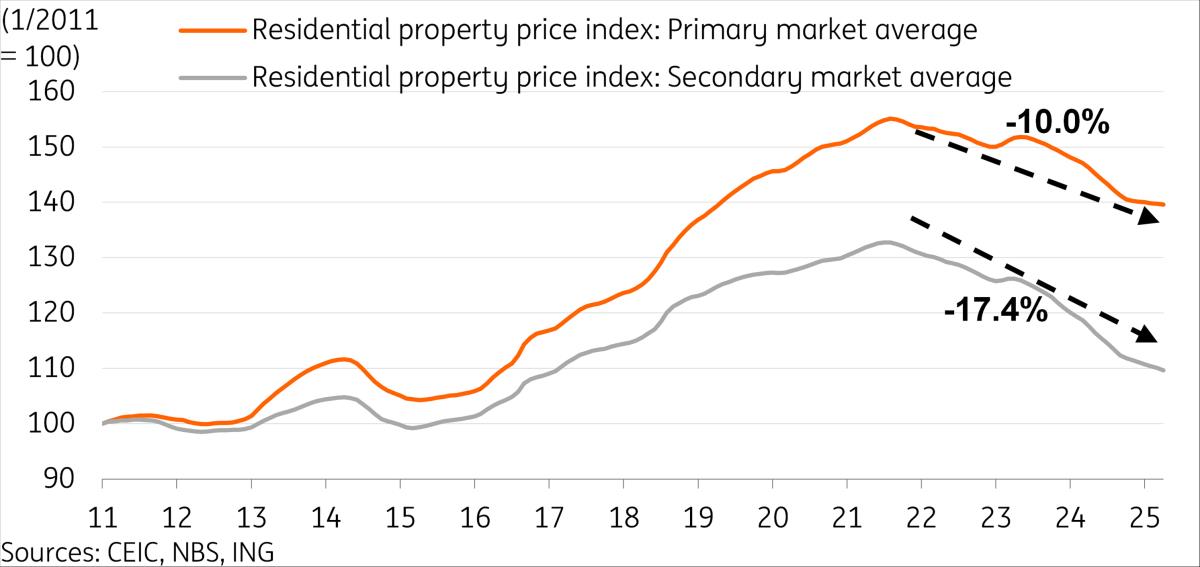
More striking still is the price picture. Used home values are now just 10% above 2011 levels, meaning Chinese real estate has posted negative real returns for over a decade. In a country where property once anchored middle-class wealth, this is a profound shift.
Overbuilding in lower-tier cities looks indisputable, with construction in some areas having run 3–5 years ahead of actual household formation. Data discrepancies between population registers and household records further cloud demand forecasts. Commodity Intelligence openly questions the integrity of China’s demographic data, with discrepancies emerging between population counts, police data and household registrations—raising further questions about the underlying demand assumptions that underpinned the boom.
While local governments are now buying excess inventory and easing credit conditions, the road to recovery looks long. In Zhengzhou, part of a five-city group reducing inventories, unsold stock fell by over 1.3 million m²—progress, but against a still-high national backdrop.
New housing starts in 2024 were just 739 million m²—only ~33% of the 2019 peak—and likely lower in 2025. With long-run sustainable demand estimated at ~800 million m², supply has now dipped below equilibrium, but inventories remain bloated.
In our view, this is not a V-shaped rebound. It’s a long reset. And for commodity investors, the message is stark: China is now forming more households than it is building homes for—proof that the property bubble has well and truly burst.
These are dynamics we’ve tracked closely at Commodity Intelligence, supported by on-the-ground insight from Beijing to Anhui. For clients seeking deeper data or regional analysis, we’re happy to provide more.
Original story from the news below:
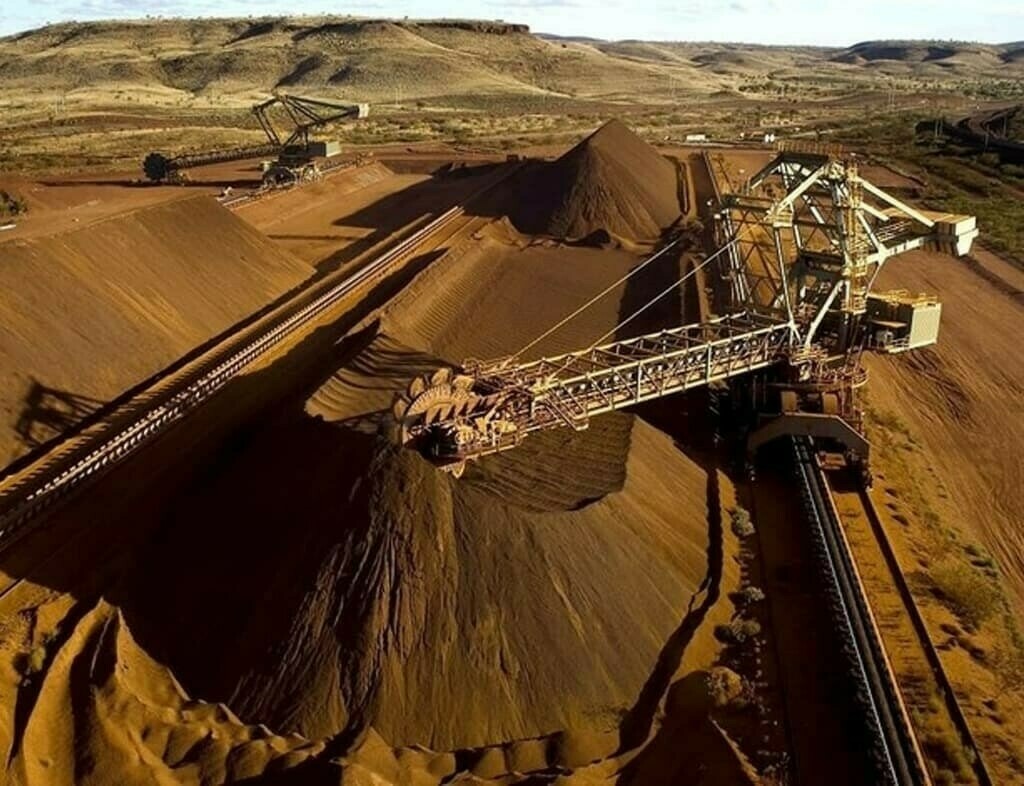
SINGAPORE: Iron ore futures prices fell on Monday, pressured by tepid economic data from top consumer China and uncertain near-term demand for the steelmaking material.
The most-traded September iron ore contract on China’s Dalian Commodity Exchange traded 1.03% lower at 721.5 yuan ($100) a metric ton, as of 0258 GMT.
The benchmark June iron ore on the Singapore Exchange was 0.56% lower at $99.5 a ton.
Broadly, growth in China’s industrial output and retail sales slowed in April, official data showed on Monday, as a trade war threatened to dampen momentum.
Moreover, property investment in China fell 10.3% in the first four months of 2025 from a year earlier, following a drop of 9.9% in the first quarter, official data showed on Monday.
Hot metal output, typically used to gauge iron ore demand, fell 8,700 tons month-on-month to 2.45 million tons, said broker Everbright Futures, which attributed the fall to blast furnaces undergoing maintenance.
Total iron ore stockpiles across ports in China also grew, inching up 0.26% on-week to 137 million tons as of May 16, Steelhome data showed.
Still, production among Chinese electric-arc-furnace steel producers ended its two-week slide and increased again on May 15, as hopes for better profits and higher steel demand encouraged the mills to lift output, said consultancy Mysteel.
“The number of profitable blast-furnace steel mills in China continued to increase this week, mainly thanks to the recovery in finished steel prices,” added Mysteel in a separate note.
Other steelmaking ingredients on the DCE languished, with coking coal and coke down 2.43% and 2.17%, respectively.
Steel benchmarks on the Shanghai Futures Exchange lost ground.
Rebar fell 1.03%, hot-rolled coil weakened 1.11%, wire rod fell nearly 1.5% and stainless steel eased 0.19%.
Featured
The End of The Global Carry Trade
Japan’s 10-year government bond yield climbed above 1.77% on Wednesday, marking a fresh 17-year high ahead of a crucial debt auction that could indicate investor demand amid rising fiscal concerns.
The Ministry of Finance plans to auction around 800 billion yen in 20-year JGBs.
On Tuesday, the government proposed a supplementary budget exceeding 25 trillion yen to fund Prime Minister Sanae Takaichi’s stimulus plan, far above last year’s 13.9 trillion yen extra budget, stoking debt worries.
Meanwhile, Bank of Japan Governor Kazuo Ueda told the prime minister that the central bank is gradually raising rates to steer inflation toward its 2% target while supporting sustainable growth.
Afterward, Ueda told reporters the prime minister made no specific request on monetary policy.
On the data front, machinery orders in Japan rose more than expected in September, signaling robust capital spending.
https://tradingeconomics.com/japan/government-bond-yield
Commodity Intelligence Comment - Wed 07:49, Nov 19 2025
Feature by James Burdass:
The Japan Connection:
For much of my investment career, investors have engaged in the well known "carry trade". I had a front row seat at Mitsubishi UFJ Trust during the late 2000's, working for a Japanese institution. During that time, I advised on the major GPIF account, one of the largest single mandates in the world.
I led on Materials in the World ex-Japan. Japan has a unique role as the world's largest creditor nation. As readers know, it has historically been the largest single holder of US treasuries (holding over $1.1 trillion).
Japan's persistent current account surpluses averaged approximately $127 billion annually from 2020-2023 according to the Ministry of Finance Japan. These surpluses have allowed Japanese institutions to accumulate massive foreign asset holdings over decades.
Look at the chart in the link above. It's obvious that the interest rate environment in Japan is changing and the risks of such a structural shift are significant, yet we flag a risk that the market is too complacent about it.
What's the problem here?
For many years, investors have borrowed funds at virtually 0% from Japan and then converted to US Dollars or to Euros to buy higher yielding assets (like US bonds or stocks).
Asian buyers (and others using the carry trade) therefore become key funders of the US fiscal deficit and stock markets.
Now Japan, having raised rates earlier in the year, looks to increase them further. The issue with Japan raising rates is that, with the yield on the 10 year JGB at 1.77%, the market is perilously close to assigning something resembling a normal interest rate to Japan again, for the first time in many investor's memory.
A New World Order, with fracturing trade routes and trading blocs has already dampened non-aligned Government and investor appetite to fund the US deficit. After all, if free trade is blocked, why is Beijing obliged to fund it?
As Japan raises rates, this cheap borrowing disappears. Investors will be concerned that others may be forced to unwind these trades, which then involves selling the foreign assets and buying back the Japanese Yen.
In 2024, as this trend first began, there were some shockwaves, initially in Asian markets such as the KOSPI. However, since that time, investors seem to have become largely complacent about this risk. This is despite the clear shift that a non-zero interest rate would give to an institutional investor like Mitsubishi. The incentive becomes to repatriate capital to Japan. This effect can potentially have second order effects - upward pressure on borrowing costs in other countries, too.
This is the most visible threat to global liquidity that we have seen for some time.
The Good News
There is a little bit of good news here. Rate hikes from the BoJ mean that Japan feels it may have beaten its multi-decade long fight against deflation. Inflation has been persistent (above 2% for several years now) and wage growth continues.
Next steps
The Takaichi administration is clear in its position that the BoJ should not raise rates further at the December meeting (a rise from 0.5% to 0.75% is thought possible). This is a meeting that will have important effects, not just for Japan but also for global liquidity.
Conclusion
The structural risk of the Carry Trade unwinding requires investors to seek protective positions and identify beneficiaries of capital repatriation.
Commodity Impact
The Bank of Japan is closing the door on two decades of global monetary subsidy. While political noise will continue through the December meeting, the fundamental shift toward JGB normalisation means the cost of funding the US deficit is set to rise, and there's a risk that global liquidity could contract.
The clearest commodity beneficiary from this is gold. If investors become less complacent about US fiscal risk, this would encourage central banks to continue topping up their gold positions. Should the US Federal Reserve be seen to be managing debt interest costs, again this comes back to a preference for the yellow metal.
In summary, the rise in Japanese interest rates acts as a systemic stressor on the global financial system. Since gold is a non-debt, anti-systemic asset, the increase in volatility, uncertainty, and sovereign debt risk makes the metal a prime beneficiary. Commodity Intelligence scored a major win for clients by calling gold higher in 2025, we have recently said that gold can progress to $4,750 during 2026.
For areas other than precious metals, this is a risk - we think more people should be talking about it in a wider market that seems fully focussed on disruptors and potentially overvalued AI plays in a market saturated with technology bulls. We would be interested to hear your views, too, at james@commodityintelligence.com.
Featured
Beyond the Barcelona Sun: Divergent Paths for BHP and Rio Tinto
Codelco announced on its website that at the Bank of America Merrill Lynch Global Metals, Mining & Steel Conference, BHP and Codelco unveiled an exploration agreement targeting the state-owned company's assets in the Antofagasta region.
The agreement is subject to the requirements stipulated in Law No. 19,137, which outlines the conditions for Codelco to collaborate with third parties in developing mining projects that are not currently operational or are not part of the company's decision to allocate them to its replacement or expansion plans through direct development.
In 2022, Codelco offered 34 exploration assets to interested companies to assess the possibility of collaborative development for projects that do not meet the criteria for independent development by the company.
This portfolio includes the "Anillo" mining area, located in the Antofagasta region and spanning 24,000 hectares. The mine is currently in the early exploration stage, with Codelco and third parties having conducted multiple exploration activities there in the past.
"The company must focus on and prioritize its exploration and investment efforts within the approximately 2.3 million hectares of mineral resources it holds in Chile. We possess some highly promising mining concessions, and to expedite their development, we must advance collaborative approaches aimed at capturing value through partnerships with third parties. Our collaboration with BHP, one of the world's largest mining companies, is an example of this," explained Maximo Pacheco, Chairman of Codelco's Board of Directors.
BHP has unique advantages in exploring this project, and if successful, it will possess unique infrastructure capabilities to accelerate the project's development. As part of the agreement, the polymetallic mining company will be able to invest up to $40 million to explore and study the mining potential of the ore deposit.
Mike Henry, CEO of BHP, stated, "BHP is one of the world's leading copper producers, and copper is a crucial metal driving economic development, decarbonization, and digitalization. We are delighted to explore this collaborative opportunity with Codelco, with whom we already have a significant and successful mining presence in Chile. Our ongoing commitment to innovation and our 140 years of experience in mining project development enable us to partner with Codelco to deliver more copper to the world."
If a sustainable business case is established, the contract will include a commitment to collaborate with Codelco in developing the project. If the application is unsuccessful, the research and information obtained will become the property of Codelco.
Commodity Intelligence Comment - Wed 08:53, May 14 2025
Here is our take on Mike Henry's speech at BAML's conference in Barcelona and how the messaging contrasts with Rio Tinto's remarks:
Mike Henry’s 2025 address marks a clear evolution in BHP’s strategic messaging. What stands out is Henry’s emphasis on BHP’s role as a “point of stability” in an increasingly uncertain global environment. This rhetorical pivot showed BHP’s intent to not just weather instability but actively position itself as a safe harbour investment. While operational excellence and capital discipline remain core themes, the speech more forcefully links these traits to BHP’s ability to navigate extremes—from intensified trade wars to potential economic fragmentation.
We thought that a particularly noteworthy update was the growing prominence of copper and potash in BHP’s portfolio. Henry announced that copper now represents 39% of BHP’s EBITDA, and confirmed that production has grown 24% since FY22—a substantial shift that reaffirms copper’s role as a long-term strategic pillar. Furthermore, the Vicuña Joint Venture (previously lesser known) was presented as a transformational copper development, with its integrated potential positioning it among the top ten global copper producers. This was complemented by a first-time disclosure of 38 million tonnes of copper resources within the JV and confirmation of a forthcoming technical report in Q1 2026—clear signals of BHP’s accelerating copper ambitions.
Potash has clearly emerged as a central theme, showing BHP’s deeper commitment to agricultural minerals. While Jansen has been discussed in past forums, Henry’s 2025 speech was much more confident and assertive in comparing it structurally to iron ore—highlighting low-cost potential, jurisdictional stability, and scalability. BHP securing MOUs with global buyers is new and material, reinforcing confidence in commercial viability as Jansen ramps up.
Finally, Henry’s remarks reflected a more assertive tone on productivity gains via the BHP Operating System (BOS). New data points—like Western Australia Iron Ore (WAIO's) ~$8 per tonne margin advantage over competitors—were used to emphasize BOS’s impact. Extending this system to Escondida could bring a second wave of performance improvement, over and above operational maintenance.
We noted with interest BHP's view that iron ore enjoys cost support at $80 per tonne. Our sense is that this floor could be lower than BHP thinks, especially as steel capacity comes out of China and Simandou hits the market.
By comparison to BHP's talk of stability, Rio Tinto was more focussed on growth. The company is now targeting a return to CAGR at 3% 2024-2033 and is highlighting growth from Oyu Tolgoi, Simandou, Rincon, Nuevo Cobre, Resolution and Arcadium.
This is potentially a differentiator between the two companies. We think that BHP is positioning itself as the strongest company in the industry in an uncertain world, whereas Rio sees itself attracted to fresh growth opportunities. As we have previously mentioned in the Daily, this is the result of decisions that were set in motion some time ago. Rio Tinto's strategic pivot towards battery materials is also evident in their acquisition of Rincon and the recent Arcadium Lithium merger, positioning them to capitalise on the energy transition. This focus on growth, particularly in copper and lithium, suggests a higher risk appetite compared to BHP's more conservative stance.
Not everyone at BHP is happy with the relative lack of growth. Indeed, they attempted to buy Anglo American for more copper exposure. We still see a possibility that the internal bureaucracy pivots back to M&A, yet a key takeaway is that it was absent from the speech. The new "Anillo" mine exploration adds an interesting early phase exploration opportunity.
We have run through in our recent feature the candidates for the new CEO. Perhaps the unspoken message is not that change is off the table, but that it may be paused until a new CEO is in place.
The transcript is here:

Our balance sheet shows that the surplus in the oil market is set to grow in 2026, following OPEC+'s decision to unwind supply cuts at a quicker-than-expected pace. Non-OPEC supply is also expected to grow at a healthy clip despite this year's price weakness.
According to our balance, we will see a surplus of more than 2m b/d in 2026. Global supply is set to grow by 2.1m b/d next year, while demand looks to be more modest at around 800k b/d.
The peak of this surplus is expected in the first half of 2026. However, with our balance sheet showing a surplus in every quarter next year, global oil stocks should continue to build through the year, keeping downward pressure on prices. We forecast that ICE Brent will average US$57/bbl over the year, with the key assumption being that Russian oil flows continue unabated despite US sanctions on Rosneft and Lukoil.
The scale of the surplus and the expected build in inventory should put the forward curve under additional pressure, pushing it deeper into contango. The front end of the curve has held up better than expected as supply risks provide support. In addition, the growing amount of Russian oil at sea not making its way to the destination suggests the spot market may be tighter than what the oil balance suggests at the moment.
This is a key risk to our bearish view. Clearly, if sanctions prove more effective than we and the market expect, this leaves upside for oil prices. However, Russia has managed to keep oil flowing since 2022 despite sanctions and embargoes. We suspect the use of intermediaries and the larger discounts available to buyers of Russian crude oil should see flows continue.
Downside risks include ongoing peace talks. If they lead to the lifting of certain sanctions on Russia, much of the supply risk hanging over the oil market will ease. While we don’t believe such a scenario would dramatically increase Russian oil supply, given that it’s held up well despite sanctions, removing this risk could push Brent down to the low $50s.
https://think.ing.com/articles/bearish-oil-outlook-but-clear-upside-risks/

SOFIA, Bulgaria (AP) — Bulgarian maritime authorities on Saturday launched efforts to evacuate the crew of the oil tanker Kairos stranded off the Black Sea port of Ahtopol and believed to be part of the “ shadow fleet ” used by Russia to evade international sanctions linked to its war in Ukraine.
Last week, the Gambian-flagged 274-meter Kairos caught fire after an alleged attack with Ukrainian naval drones in the Black Sea near the Turkish coast. It was sailing empty from Egypt toward the Russian port of Novorossiysk.
The 149,000-ton Kairos, formerly flagged as Panamanian, Greek and Liberian, was built in 2002. It was sanctioned by the EU in July this year, followed by the U.K. and Switzerland.
The ship entered Bulgaria’s territorial waters on Friday under tow by a Turkish vessel, but the mission was abruptly abandoned, leaving the tanker to drift across the sea without power like a ghost ship before stranding less than a nautical mile off the shore.
On Saturday, Rumen Nikolov, in charge of rescue operations at the Bulgarian Maritime Agency, said that it must be established through diplomatic channels why the tanker was brought into Bulgaria’s territorial waters.
Nikolov explained that the empty tanker is stable despite the bad weather, adding that there is no danger to either the crew or the environment. He said that all 10 crew members, of different nationalities, are in good condition and have enough food and water for about three days. “When the weather calms down, the ship will be towed to a safe place,” he added.
The head of border police, Anton Zlatanov, told the Nova TV channel, that communication was established with the crew, who had complied with orders and dropped anchor, and the ship is currently stable in a position off Ahtopol. “The crew expressed their desire to be evacuated, but this must be done in the safest way possible,” Zlatanov added.
Zlatanov noted that the tanker is being monitored by a radio communication system, thermal cameras from the shore, and a radar system, while communication with the crew is being maintained.

Orban to Send a Large Economic Delegation to Russia
In early December, a large business delegation will travel from Hungary to Moscow to engage "exclusively in discussions on economic issues," Hungarian Prime Minister Viktor Orban stated at a campaign rally in the city of Kecskemét on Saturday, December 6. According to him, it is necessary to "start thinking about the world after the war and after sanctions" right now. "We must act proactively because, if God helps us and the war ends without our involvement, and if the American president manages to reintegrate Russia into the world economy and lift the sanctions, we will find ourselves in a completely different economic space," Orban emphasized. He added that he is negotiating with both the U.S. and Russia but cannot "disclose all the details." ## Acquisition of Gas Stations in Europe Hungarian oil and gas company MOL plans to acquire oil refineries and gas stations in Europe owned by Russian companies Lukoil and Gazprom, which are under U.S. sanctions. Additionally, MOL wants to participate in oil production in Kazakhstan and Azerbaijan. Viktor Orban discussed this issue with U.S. President Donald Trump during his visit to Washington in early November, AFP reports. Orban's Visit to Moscow On November 28, the Prime Minister of Hungary visited Moscow, where he met with Russian President Vladimir Putin. Russian participants in the negotiations included presidential aide Yuri Ushakov, Deputy Prime Minister Alexander Novak, and Foreign Minister Sergey Lavrov. This was Orban's second visit to Russia since the beginning of the war in Ukraine. He met with Putin for the 14th time, Reuters reported. In Moscow, Orban promised, among other things, to continue purchasing Russian oil.
https://news.inbox.lv/14zkr56-orban-to-send-a-large-economic-delegation-to-russia?language=en
Dispute centres around sustainability directive that will fine violators

QatarEnergy CEO and Qatar's Minister of Energy Saad al-Kaabi attends a signing ceremony with Sinopec, in Doha, Qatar, November 21, 2022. PHOTO: REUTERS
Qatar's Energy Minister Saad al-Kaabi said on Saturday he was hopeful the European Union would resolve companies' concerns over its sustainability laws by the end of December.
Qatar has aired its frustration with the EU's Corporate Sustainability Due Diligence Directive (CSDDD) and has threatened to halt gas supplies. The dispute centres around CSDDD's potential to fine violators up to 5% of total global revenue. The minister has repeatedly said Qatar would not reach net-zero emissions targets.
Kaabi said global gas demand would remain strong, citing rising energy needs from artificial intelligence, and projected that liquefied natural gas (LNG) demand would reach 600-700 million tonnes per annum by 2035.
"I have no worry at all about gas demand in the future," he said at the Doha Forum conference in Qatar, adding that energy needed for AI would be a key driver of demand.
At full production, the North Field expansion project is expected to produce 126 million metric tons of LNG per annum by 2027, boosting QatarEnergy's output by some 85% from its current 77 mtpa.
He said the first train of Golden Pass LNG, its joint venture with ExxonMobil in Texas, should come online by the first quarter of 2026.
Oil prices in the $70 to $80 per barrel range would provide enough revenue for companies to invest in future energy needs, al-Kaabi said, adding prices above $90 would be too high.
He also warned that too much real estate was being built in the Gulf and a real estate bubble could be forming.
https://tribune.com.pk/story/2580920/qatar-hopeful-eu-will-address-concerns
British Petroleum is set to ramp up oil and gas production in northern Iraq, with plans to lift output at four key Kirkuk-area fields as part of a major redevelopment push backed by Baghdad. According to Iraqi Oil Ministry Undersecretary Bassim Khudair, BP aims to boost crude production to around 450,000 barrels per day and natural gas output to 500 million cubic feet per day from the fields under its management. The contract also prioritizes eliminating routine gas flaring—one of Iraq’s most persistent energy and environmental challenges.
The move follows Iraq’s formal activation of its development contract with BP in October. At the time, Oil Minister Hayan Abdel-Ghani said the agreement targets an initial production level of 328,000 bpd, marking a significant step toward rehabilitating some of the country’s oldest producing assets. The deal, signed earlier this year, will see BP work alongside Iraq’s North Oil Company (NOC) and North Gas Company (NGC) across the Baba and Avana domes of the Kirkuk field, as well as the Jambour, Bai Hassan, and Khabbaz fields.
Iraqi officials say the redevelopment effort will play a central role in boosting national production capacity while tackling chronic gas wastage. In June, Oil Ministry Undersecretary for Gas Izzat Ismail noted that gas-capture and development projects awarded to BP, TotalEnergies, and others could save Iraq up to $17 billion annually by reducing the vast volumes of natural gas burned off during oil production.
The four Kirkuk-area fields collectively hold around five billion barrels of proven reserves, according to NOC Director General Amer Khalil. Their expansion is expected to support Iraq’s broader plan to raise output in line with its status as the world’s fifth-largest holder of recoverable oil reserves—estimated at 145 billion barrels.
Over the past two years, Iraq has intensified efforts to attract foreign investment into its energy sector, signing multiple contracts aimed at reviving aging fields, increasing production, and capturing more of the gas currently wasted through flaring. BP’s expanded role in Kirkuk marks one of the most significant steps yet in that strategy.
https://finance.yahoo.com/news/bp-targets-450-000-bpd-171117980.html
Oil is making a strong comeback as geopolitical agendas shape energy forecasts worldwide. OPEC, founded in 1960, predicts global oil demand will rise to 122.9 million barrels per day by 2050, while the International Energy Agency (IEA) expects a peak around 2030 followed by a decline. These conflicting projections underscore how energy outlooks have become political, influenced by climate policies and economic priorities. Under President Trump, U.S. energy policy has reversed green initiatives, accelerating drilling in New Mexico and halting offshore wind projects, while global shipping and petrochemical sectors continue to rely heavily on oil. Despite cheaper renewable technologies, rising demand in fast-growing economies like India and persistent oil use in transportation andaviation signal that fossil fuels will remain central to global energy for decades—posing serious challenges for climate goals.
https://www.dw.com/en/peak-oil-experts-differ-on-when-demand-will-reverse/video-75035252
A Dutch court has frozen the assets of TurkStream operator South Stream Transport as part of a bid by Ukrainian businesses to recover losses stemming from Russia’s 2014 annexation of Crimea, the Vedomosti newspaper reported Monday.
DTEK Krymenergo, an energy company owned by Ukrainian billionaire Rinat Akhmetov, has sought compensation in several international courts after Russian authorities seized its assets in Crimea.
In November 2023, an arbitration court in The Hague ordered Russia to pay DTEK $208 million, plus interest and legal fees. Russia appealed that ruling, and the case remains before a Dutch appellate court.
According to Vedomosti, the Amsterdam District Court ordered the seizure of South Stream Transport’s assets in July as part of DTEK’s efforts to enforce the compensation. The value of the assets frozen was not disclosed.
DTEK had sought the freeze on the grounds that South Stream Transport’s interests were closely tied to Gazprom, which owns a controlling stake in the pipeline operator. South Stream Transport appealed the ruling in August, arguing it operates independently of the Russian state, Vedomosti reported.
South Stream Transport was originally created to build the South Stream natural gas pipeline beneath the Black Sea, a project that was scrapped after Russia’s 2014 annexation of Crimea. The company later switched to constructing the TurkStream pipeline, which was completed in 2020.
DTEK, South Stream Transport and Gazprom did not respond to Vedomosti’s requests for comment.
The gas carrier Valera (formerly known as "Veliky Novgorod") with a cargo of liquefied natural gas (LNG) from Gazprom's project "LNG Portovaya" in the Baltic Sea has docked for unloading at the Beihai terminal, located in the port of Teshan, China. This was reported by Reuters, citing data from LSEG. The complex, with a capacity of 1.5 million tons of LNG per year, was launched in September 2022. Its products were purchased in Turkey, Greece, China, Spain, and Italy, but in February 2025, sanctions began to apply to "LNG Portovaya." Since then, the plant has been unable to sell any batches until China agreed to help. In October, another batch of fuel from "LNG Portovaya" was transshipped from the gas carrier Perle to another vessel off the coast of Malaysia, but it is unknown whether the delivery was completed. In August, the Beihai terminal received a batch of LNG from another sanctioned Russian gas project — "Arctic LNG-2," which is being developed by Novatek. Production began in 2023, and shipments were planned for early the following year. However, U.S. pressure prevented any deals from being made before the cargo was sold to China. At the same time, agency sources claim that Novatek agreed to supply batches at a 30-40 percent discount from the market price, as the company was unable to find another buyer. The final price of LNG from "LNG Portovaya" has not been specified. The agreement of Chinese buyers to deal with the sanctioned project led in November to the first monthly increase in Russian LNG supplies in annual terms since the beginning of the year. Nevertheless, as of the end of the first 11 months, the export of this type of fuel decreased by two percent.
Oil and gasoline prices are expected to decline next year, according to the latest forecast from the Energy Information Administration (EIA).
The EIA published its November Short-Term Energy Outlook last month, which projected that the price of Brent crude oil will decline from $69 a barrel in 2025 to $55 a barrel next year. That would be well below the $81 per barrel that prevailed in 2024.
Gas prices are also projected to continue their decline into next year. Retail gas prices averaged $3.30 a gallon in 2024 and are at $3.10 a gallon this year, but are projected to decline further to $3 a gallon in 2026, according to the EIA's report.
U.S. production of crude oil picked up this year and is expected to remain at the level in 2026, with the EIA finding the U.S. produced 13.2 million barrels per day in 2024. The agency projected crude oil production will be 13.6 million barrels per day this year – the same as in 2026.
Natural gas prices are expected to continue to rise after a notable increase this year. The natural gas price at Henry Hub was $2.20 per million British thermal units (BTUs) in 2024 and rose to $3.50 this year, while the EIA forecasts its rise will continue to $4 in 2026.
In recent years, the U.S. has become the world's largest exporter of liquefied natural gas (LNG), holding the top position in 2023 and 2024, and export levels have continued to rise.
EIA noted that the U.S. exported 12 billion cubic feet per day of LNG last year, with that figure rising to 15 billion cubic feet per day in 2025 and 16 billion cubic feet per day next year.
The EIA's report also broke down the share of electricity generation by source across the U.S., which showed natural gas as the largest source with a 40% share in 2025 and 2026, down slightly from 42% a year ago.
The share of electricity generated by renewables – a category which includes hydropower, solar, wind, geothermal and biomass – accounted for 23% in 2024 and has been on an upward trend, with EIA putting its 2025 share at 24% and forecasting a rise to 26% next year.
Nuclear power's share of the power mix decreased slightly from 19% to 18% from 2024 to 2025, while it's expected to hold steady at 18% next year.
Coal's share of total electricity generation has also been relatively flat, with EIA reporting it was at 16% last year, 17% in 2025, and projecting a return to 16% next year.
The report also touched on emissions of carbon dioxide (CO2), which rose slightly from 4.8 billion metric tons in 2024 to 4.9 billion metric tons this year. EIA forecasts it will return to 4.8 billion metric tons next year.

Prices for Russian crude shipments from its Black Sea and Pacific ports have fallen to their lowest levels since the full-scale invasion of Ukraine in February 2022, Bloomberg reported Tuesday, citing data from Argus Media.
Urals crude, Russia’s main export grade, sold for an average of $38.28 per barrel in Novorossiysk during the week ending Dec. 7, down $2.80 from the previous week. In the Baltic ports, prices dropped $2.40 to $41.16 per barrel.
ESPO crude, which is exported from Pacific ports to China, fell $1.60 over the week to $52.36 per barrel.
The average discount on Urals relative to Brent crude reached $25.80 per barrel, approaching historical records. Bloomberg noted that the discount is more than twice what it was before the introduction of new U.S. sanctions on Rosneft and Lukoil.
Although refineries in India and China, which account for 90% of Russia’s oil exports, have started rejecting some Russian cargoes, shipments from ports continue.
Exports even rose in the first week of December from 3.94 million to 4.24 million barrels per day.
However, an additional 20 million barrels have been stored in tankers converted into floating storage over the past two weeks. The total volume of Russian oil at sea has now reached a record 180 million barrels.
The Trump administration's sanctions could cause Russia to lose 1.2-1.4 million barrels per day of oil exports in the coming months, according to Kpler analyst Johannes Raubal.
More than half of this volume (800,000 bpd) comes from India, 300,000-400,000 bpd from China and 180,000 bpd from Turkey.
Raubal expects volumes to eventually recover once new supply routes and payment channels are established and Russian producers build a network of intermediaries to mitigate sanction risks.
Nevertheless, discounts on Russian oil of more than $20 per barrel are likely to persist or even widen in the near term.
The price drop threatens a significant shortfall in Russia’s oil and gas budget revenues, a key source of funding for its war effort, economist Yegor Susin warned.
Over the first 11 months of the year, the treasury has already missed out on one in five rubles of resource taxes, with November seeing a 34% year-on-year decline. The shortfall is expected to accelerate in January due to continued discounts.
Glenfarne Alaska LNG, LLC and POSCO International Corp. have signed definitive agreements finalising the formation of a strategic partnership for the development of the Alaska LNG project, the only federally authorised LNG export project on the US Pacific Coast.
Glenfarne CEO and Founder, Brendan Duval, and POSCO International Corp. CEO, KyeIn Lee, commemorated the agreement in a ceremony attended by Secretary of the Interior and National Energy Dominance Council Chairman, Doug Burgum, and Secretary of Energy and National Energy Dominance Council Vice Chairman, Chris Wright, at the Department of Energy in Washington, D.C. on 1 December 2025. The strategic partnership includes:
Duval said: “POSCO Group is one of the world’s leading steel and energy companies, and their commitment to Alaska LNG reflects the high degree of support in Asia and across the Pacific for unlocking this valuable source of abundant, competitive LNG. Our partnership represents an important milestone in Glenfarne’s progress developing this project, backed by strong industry support and engagement.”
Glenfarne is developing Alaska LNG in two financially independent phases to accelerate project execution. Phase One consists of the in-state pipeline infrastructure to deliver natural gas from Alaska’s North Slope to help meet Alaska’s domestic energy needs. Phase Two of the project will add the LNG terminal and related infrastructure to export 20 million tpy of LNG.

The majority of India’s biggest refiners are buying Russian oil from non-sanctioned sellers and traders as widening discounts of Russia’s crudes to benchmarks are tempting the price-sensitive Indian importers, sources involved in the purchases told Bloomberg on Wednesday.
Before the latest sanctions on Russian oil producers Rosneft and Lukoil, India bought from Russia around one-third of all the crude it imported, as it sought cheaper oil.
Amid tense trade negotiations with the United States, India earlier this year was singled out by U.S. President Donald Trump as the main financier of the Kremlin’s oil revenues. At the time, India remained adamant that it would buy the cheapest oil available, regardless of whether it came from Russia or elsewhere.
However, the U.S. sanctions on Rosneft and Lukoil upended all previous plans by Indian refiners, who hastened to withdraw from the spot market for Russian crude in December.
But Bharat Petroleum Corporation Limited (BPCL) and Indian Oil Corporation (IndianOil) have bought Russian crude from non-sanctioned companies for January delivery, at a discount of $6-$7 to Brent crude, reports emerged last week.
Combined, IndianOil and Bharat Petroleum have purchased in recent days 10 cargoes of non-sanctioned Russian crude, including Urals, according to Bloomberg’s sources.
Another state-owned Indian refiner, Hindustan Petroleum Corporation Limited (HPCL), is seeking non-sanctioned Russian oil for January delivery, the sources said.
Private refiner Reliance Industries, the owner of the world’s biggest integrated refining complex at Jamnagar, is a notable absence among Indian refiners in the market for non-sanctioned Russian crude, according to Bloomberg.
Reliance, which operates the 1.4 million barrels per day (bpd) Jamnagar complex, has a long-term deal with Rosneft to buy almost 500,000 bpd. Reliance was India’s single biggest buyer of Russian crude, until now, but it halted all purchases of oil from Russia last month, after the sanctions on Rosneft and Lukoil.
By Tsvetana Paraskova for Oilprice.com
12.10.2025 By Tank Terminals - NEWS
December 10, 2025 [Reuters]- Exxon Mobil is targeting $25 billion in earnings growth from 2024 to 2030 and will increase oil and gas production, the top U.S. oil producer said on Tuesday as it leans on profitable assets in Guyana and the Permian Basin.
Exxon also announced that Chief Financial Officer Kathy Mikells will retire effective Feb. 1 due to a non-life-threatening health issue and will be succeeded by Neil Hansen, currently president of global business solutions.
The outlook represents a $5 billion increase from its previous plan, although Exxon will not increase its annual project spending from prior guidance. Shares of Exxon were up 3% in morning trading.
Exxon said its updated corporate plan reflects its work to cut costs and increase profits even through periods of oil price volatility. Its upstream focus also includes growing its liquefied natural gas business.
“We are more profitable than we were five years ago, and we expect that to continue as the advantages we’ve unlocked position us for even greater opportunities in the years ahead,” Exxon CEO Darren Woods said in prepared remarks.
LOW-COST PERMIAN OIL WILL BOOST PROFITS
Upstream production will reach 5.5 million barrels of oil equivalent per day by 2030, up from a previous forecast of 5.4 million boepd.
That will be helped by the Permian Basin, the top U.S. oilfield, where Exxon said it will grow production to 2.5 million boepd, up from the previous goal of 2.3 million boepd.
Earnings from the upstream business is expected to grow by more than $14 billion through the end of the decade from 2024.
Artificial intelligence is being used to direct drilling paths and Exxon said AI is allowing it to save money across operations. Cost of supply in the Permian is expected to be around $30 per barrel, Exxon said, down $5 from its previous expectation.
Capital expenditure will be between $27 billion to $29 billion next year, and $28 billion to $32 billion from 2027 through 2030 as LNG projects develop further.
Exxon said it also targets $35 billion in cash flow growth by 2030 versus 2024, representing a $5 billion increase from its earlier outlook.
Exxon increased its cost savings plan by $2 billion and now expects to reach $20 billion in reductions by 2030.
https://tankterminals.com/news/exxon-boosts-forecast-aims-for-25-billion-earnings-growth-by-2030/
Featured
The Iran Oil Shock You're Not Seeing (Yet)

Iran, one of the largest oil exporting countries and a key player in the Organization of the Petroleum Exporting Countries (OPEC), has recently increased its oil storage capacity by adding 2 million barrels, after starting the operation of two tanks that have been upgraded at Iran’s Kharg oil terminal in the operational zone.
The reconstruction of the tanks, whose capacity is 1 million barrels of oil (mmbbl) each, was completed and announced on Saturday during a visit by Hamid Bovard, CEO of the National Iranian Oil Company (NIOC) and Deputy Minister of Petroleum.
Bovard stated that these tanks are expected to enhance Iran’s export flexibility, facilitate upstream production, and reduce ancillary costs such as tank leasing. He highlighted the significant value of the two tanks to the oil industry.
Iran holds the third largest proven oil reserves estimated at 209 billion barrels (bbl) and the second-largest natural gas reserves estimated at 1,203 trillion cubic feet (tcf) as of 2021.
https://egyptoil-gas.com/news/irans-boosts-oil-storage-capacity-with-2m-barrels/
Commodity Intelligence Comment - Mon 07:10, May 19 2025
Feature by James Burdass:
https://www.reuters.com/graphics/ISRAEL-PALESTINIANS/IRAN/byvrmodrrpe/
Iran is executing a coordinated strategy to expand oil and gas storage capacity, improve export flexibility, and quietly progress nuclear talks with the U.S. These developments increase the likelihood of a meaningful supply response — potentially catching any oil bulls off guard.
The National Iranian Oil Company (NIOC) aims to increase crude oil storage capacity by 7.7 million barrels, with 2 million barrels coming from upgrades at Kharg Island — the country’s main export terminal.
Meanwhile, progress continues at the strategically important Jask oil terminal, positioned on the Sea of Oman.
https://en.trend.az/iran/4042506.html
Jask allows Iran to bypass the Strait of Hormuz, reducing its vulnerability to regional tensions and enhancing export flexibility. This project is widely seen as a "game-changer" for Iran's ability to sustain oil flows during times of geopolitical stress. Here is a paper on why it is so important:
https://iramcenter.org/uploads/files/The_Strategic_Importance_of_Jask_Port-WebPDF_v21.pdf
Additional moves include:
https://en.shana.ir/news/658819/Sarajeh-gas-storage-capacity-to-increase-to-1-5-bcm
We have previously flagged these initiatives as significant. Historically, scepticism around Iran's project execution has been warranted, but recent activity suggests real momentum. The upgrades are material and reflect a sustained push to improve physical infrastructure — signaling intent to reassert Iran's role as a major energy supplier. The AI flags them as important.
Diplomatic Clock Is Ticking in Favour of More Supply from Iran
The next major headlines could be the completion of Jask, or even a major settlement with the White House. There's more chance of the next development implying increased rather than decreased supply.
Our basis for saying this is the reports during the last week that talks at the working level on Iran's uranium enrichment have progressed to a point where the White House has put out a formal proposal. In April, the US declined to be specific on what might work, yet Iran provided proposals.
This month, a proposal has come back from the US side. Iran claims Non-Proliferation Treaty rights to enrich, however Trump suggests that Iran knows it "must move quickly". The urgency in the talks has ratcheted up a level or two, and in our experience, this increases the prospect of one side or the other moving to "make a deal".
The prospect of an Iran deal alongside their determined efforts to boost supply is a major development we can't ignore. While the immediate knee-jerk reaction might be bearish on oil, the devil will be in the details. How quickly and completely will sanctions be lifted? How readily can Iran ramp up production and find buyers? And crucially, how will OPEC+ respond to this new dynamic? This isn't a simple 'slam the door on oil' scenario, but it does make us think that there's an information asymmetry whereby matters are progressing more rapidly behind the scenes and in the Iranian oil industry than the market may be fully aware of.
If you're an oil bull, ignoring this could risk being behind the curve. Ignoring the interplay between Iran's burgeoning oil infrastructure and the shifting geopolitical winds between Tehran and Washington carries the risk of being blindsided. On balance, now might not be the time to increase your energy exposure, in light of these developments.
Featured
From Control to Contest - Oil outlook
Goldman Sachs reduced its oil price forecast following decisions by the Organization of the Petroleum Exporting Countries and its allies, OPEC+, to accelerate oil output increases, the bank said in a note dated Sunday.
The bank now expects Brent crude to average $60 per barrel for the rest of 2025 and $56/bbl in 2026 down by $2 from its previous estimate.
It has also cut its forecast for West Texas Intermediate (WTI) crude by $3/bbl, now projecting it to average $56/bbl for the remainder of 2025 and $52/bbl in 2026.
On Saturday, OPEC+ agreed to increase oil production for a second straight month, boosting output in June by 411,000 barrels per day despite falling prices and weakened demand expectations.
Goldman Sachs views the OPEC+ decision as a long-term equilibrium strategy aimed at maintaining internal cohesion and strategically regulating U.S. shale supply amid relatively low inventories.
The bank now anticipates a final OPEC+ production increase in July of 0.41 million barrels per day (mb/d), up from the previous estimate of 0.14 mb/d.
This revised forecast is based on the group’s recent decision and stronger-than-expected economic activity data, suggesting that the expected demand slowdown may not yet be evident enough for OPEC+ to slow the pace of production increases when determining July production levels on June 1, the bank noted.
Despite the relatively tight spot fundamentals, Goldman Sachs believes that the high spare capacity and high recession risk skew the risks to oil prices to the downside.
Brent crude futures were trading at $60.02 a barrel by 0802 GMT, while U.S. West Texas Intermediate crude was at $56.96 a barrel.
(Reporting by Anmol Choubey in Bengaluru, Editing by Louise Heavens)
Commodity Intelligence Comment - Tue 06:49, May 06 2025
Feature by James Burdass:
Focus shifts from price support to signs of a global supply and power realignment
The era of price support may be ending. With OPEC accelerating the rollback of its production cuts and oil prices slipping under renewed supply pressure, the global energy market appears to be entering a new phase — not of balance, but of contest. Behind the headlines lies a deep shift: Saudi Arabia prioritising volume over price, Russia under intensifying fiscal strain, and the geopolitical calculus of crude becoming more fluid.
OPEC’s latest output decision marks a potential turning point in oil market dynamics. Following April’s initial production increase, Reuters reports that OPEC will raise output again in June by 411,000 barrels per day, bringing the total unwind of earlier “temporary” cuts to 960,000 bpd — or 44% of the original reduction.
https://www.fxstreet.com/news/opec-to-further-speed-up-oil-output-hikes-reuters-202505050001
This is no longer a one-off. What could have been incorrectly dismissed as a tactical adjustment now appears to be a strategic shift, as we have previously highlighted to you in our Daily commentary. The production unwinds are roughly three times greater than what most analysts had anticipated. This suggests a pivot by key producers — particularly Saudi Arabia — toward defending market share and total revenue, rather than strictly managing price.
There are broader geopolitical consequences. The declining oil price in USD is compounding pressure on Moscow, as a weaker Ruble erodes the real value of Urals crude exports. Recent estimates suggest Russia may now be realizing just 450 Rubles per barrel, down from around 800 earlier this year.
This dynamic introduces a potential feedback or "Doom loop":
If the loop holds, we may be closer to a geopolitical reset than markets are pricing — and further from a stable oil floor than many expect.
The scale and pace of this unwind are now too large to dismiss. For investors, this marks a shift from price control to market share warfare — with implications far beyond OPEC. The oil market is no longer being balanced; the risk is that it’s being contested. As we look for signposts to the bottom, here are some:
· Any reversal or slowdown in the unwind pace at the next OPEC meeting
· Russia's budget response and foreign exchange interventions
· Signals from major importers (India, China) on strategic stockpiling
· Shifts in U.S. shale rig counts or SPR refill activity
· Ruble-to-Urals price thresholds falling below fiscal break-even levels
We will be watching closely.
Featured
Drill Baby Drill! Turning Rhetoric into Reality?
Oil (CL=F, BZ=F) prices are decreasing, with Exxon Mobil (XOM) and Shell (SHEL) shares ticking down as they respectively cite narrowing refining margins and slowing natural gas (NG=F) sales.
On Market Domination, Tortoise senior portfolio manager and managing director Rob Thummel discusses the valuation of top energy companies while addressing the mantra behind Republican leaders and President-elect Donald Trump's stance on US oil, better known as "Drill, baby, drill."
"We have a significant amount of reserves across the US. And so what? Drill, baby drill means to me is that when we need it, we'll be able to drill more and produce more," Thummel explains. "But the goal will be to keep inflation moderated, and keep oil and natural gas prices at moderate levels so that they just don't get out of control."
Thummel also highlights that geopolitical tensions between the US and Iran under a Trump 2.0 administration could put a further strain on oil pricing: “If you sanction Iran then and actually apply the sanctions, you're going to have a basically less oil supply because the result will be lower exports of crude oil from Iran — which basically takes supply off of the market."
Commodity Intelligence Comment - Thu 08:24, Jan 09 2025
Editorial note from James Burdass:
President Donald J. Trump will be re-inaugurated on Monday 20th January 2025 at 12pm EST. We are getting incoming client interest in how "Drill, baby, drill" translates into a policy and the interplay between oil itself and gas oil equivalents. This very strong CI feature first appeared in our Daily in late November, and we feel it is still worthy of attention today, although we have shown up to date EIA data in the second graph. Rhetoric is going to smack into reality?
Regarding the Independent headline, you really need to watch this clip from Chris Wright as well:
https://www.youtube.com/watch?v=_r-7z-nNlWk
Drill Baby Drill! A translation of rhetoric into reality?
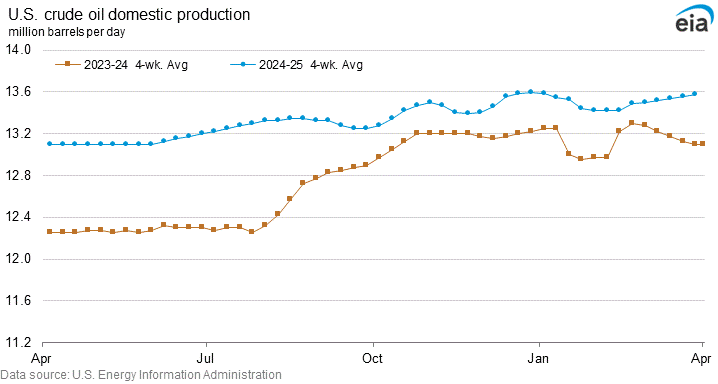
In a coincidence of sorts, two inter-related pieces of news have got us intrigued and we believe that the newly appointed US Treasury Secretary elect and ex- celebrity fund manager Scott Bessent is making a feeble attempt to row back from his comments on the strategic role of an additional 3MBPD oil production- one of his 3 Arrows framework that he has spoken of eloquently since the news first broke of his likelihood to be nominated as Treasury Secretary in the summer.
The background is that whilst speaking at the Manhattan Institute Treasury Secretary elect Bessent said that one of the arrows of his 3 Arrow Framework (made famous by the late Shinzo Abe) was an increase in US oil production by an additional 3 MBPD. This was back in the summer- for details, here is the original story of Scott Bessent’s 3-Arrow Proposal made at The Manhattan Institute where the reference is very clearly to oil- “3 million more barrels of oil per day”
Possible Trump pick for Treasury lays out 3-point economic plan that calls for deregulation, lower deficit - MarketWatch
Additional 3MBPD, you say? !!!
Now as the latest figures released by the EIA only a few hours ago suggest, this would imply the US oil production topping 16MBPD!
As this EIA announcement says, the US has been the number 1 oil producer every year since 2018- a 3 MBPD rise, if this were at all possible it would, in our view send a chill down the OPEC+ spine in Vienna.
A 3 MBPD additional US production in the next 4 years is probably going to be a geological miracle- we do not believe even Mr Trump could pull this off- something has to give. Following the announcement 2 days ago, confirming the candidature of Mr Bessent as the Treasury Secretary Elect, that 3 Arrow Framework is now under the microscope and the 3MBPD claim is now back.
In what can be called classic back peddling, team Bessent must have, having quickly realised the impossibility of an additional 3MBPD oil, now suggested something interesting: “3 million more barrels of oil equivalent per day” see this Fox News story here- Scott Bessent's 3-3-3 plan: what to know | Fox Business https://www.foxbusiness.com/politics/treasury-secretary-nominee-scott-bessents-3-3-3-plan-what-know
So, what does the additional 3MBPD oil equivalent now mean? We think gas/LNG mainly and condensates. Let's dive into some basic numbers:
The current level of all LNG projects in the US that are under development come to about 9.7BCF/D. These are all projects that started well before even the Biden administration took charge and some of them have been impacted by the LNG pause, which we believe will be lifted as one of the first acts of the Trump 2.0 administration. Not all projects are expected to successfully cross the FID-construction to LNG export “triple jump” and even if all of the 9.7BCF/D production were to come through, that would be approx 1.6MBPD in oil equivalent terms- and none of this volume should strictly be attributable as a gift of Trump 2.0.
That leaves another new 1.4 MBPD in oil equivalent terms and again our bet is that it will have to be gas and not oil- for the simple reason that there isn’t that level of spare refining capacity in the US. This new 1.4 MBPD oil equivalent volume is another 9BCF/D in natural gas terms.
Does the US have that level of reserves? Yes. Is there demand? For sure!
The rising US power generation demand could absorb this new gas- recall our features on the growing US electricity demand triggered by the AI data centre demand, especially in the North Eastern electricity corridor?
To make good that claim about the 3rd arrow of 3MBPD of oil equivalent production would suggest a very significant coal-to-gas switch in electricity generation in the US; here’s the fun bit: this level of coal-to-gas switching would achieve a very substantial level of decarbonisation in the US- speak of unintended consequences.
Ever thought Trump 2.0 could become low carbon re-industrialisation in the US? We think this is possible- though, may not be intentional. We wish the treasury secretary elect the very best for implementing his 3 arrow framework, we aren’t holding our breath on the decarbonisation idea though.
Dec. 09, 2025 11:23 AM ET Sigma Lithium Corporation (SGML) Stock, SGML:CA Stock
Summary
Lithium's Wild Rise And Fall
To preface my discussion of Sigma Lithium Corporation (SGML), a lithium exploration and development company in Brazil, I want to discuss how lithium has experienced wild swings in the last couple of years. Pre 2000s it was a niche commodity, with a global production of less than 20,000 tons, used mainly in industrial and small-scale battery applications. This changed during 2015-2020, when the rapid growth in electric vehicles (EVs) pushed demand higher, creating a historical supply shortage.
Spodumene prices, which are the benchmark used for Sigma, rose from $700 USD to $6,100 in under a year. The lithium market went red-hot, and it’s easy to see why miners and investors rushed to fund new projects, assuming those prices would stick. Unfortunately, for them, a few quarters went by and prices collapsed 80%, mainly because supply doubled in two years from 84,000 tons to 158,000 tons, leading to catastrophic losses.
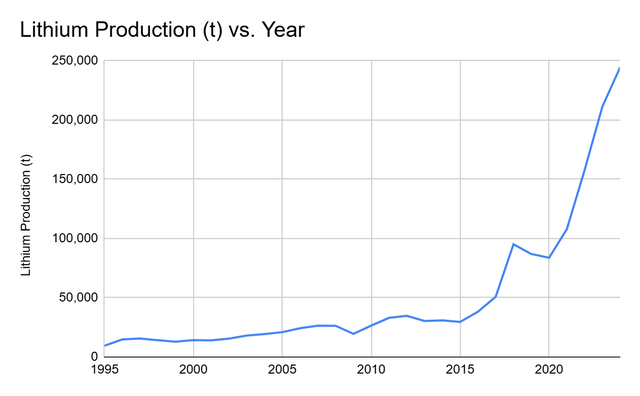
Annual Lithium World Production in tonnes (Our World In data)
Market psychology explains what happened next. After suffering huge losses, seeing mining and refiners with negative margins, investors deemed lithium nearly uninvestable.
The Turnaround
Despite low market sentiment and many investors abandoning lithium miners to their own fate, the fundamentals for the lithium market are starting to look better.
On the supply side, China controls about 60% of global refining capacity and has begun to take action and stabilize prices. The most important story was the shutdown of a major CATL-linked operation that supplied roughly 6% of global lithium and stopped producing when its license expired in August. Seven other mines in Yinchum (Chinas lithium capital) face similar scrutiny. The lithium ore found in Yinchum, known as lepidolite, is among the lowest grade globally. It contains less than 0.8% lithium oxide, compared to 5-6% range of Latin America and Australia mines, which means large waste production and other inefficiencies and environmental problems. Alongside permit reviews, Chinese authorities are also tightening environmental controls and increasing mine inspections. This basically means that production at these low-quality deposits are capped at current prices.
On the demand side, EV sales held up: IEA estimates worldwide total EV sales will exceed 20 million in 2025 (23% growth YoY). Most long‑term forecasts, including the IEA’s Global EV Outlook, imply that global EV sales will grow at roughly high‑teens to high‑20s annual rates through 2030, taking EVs to around 40% or more of new car sales by the end of the decade (currently EV share is around 20%).
China, which account for more than 30% of light vehicle global sales, is the main driver of EV growth. According to the IEA report, China's EV share of sales reached more than 50% in 2024 and could rise to 80% by the end of the decade, backed by continuing policy support and progress on affordability.
Personally, I also believe that technology advancements could bring higher EV adoption in US and Europe, where EV growth has stalled recently. The most promising technology are solid-state batteries, like the ones being developed by QuantumScape Corporation (QS). Although mass production is not currently feasible, they have higher energy density and safety profile, which might entice EV skeptics to make the switch in the future.
This year, the improvement in fundamentals started to show up in market prices, with spodumene prices up 38% YTD. If China sticks with its current supply discipline and EV demand does not roll over, prices could rally further.
A Brief Overview Of Sigma Lithium And Its Peers
Sigma Lithium was founded in 2012 to explore the Grota do Cirilo deposit in Minas Gerais, Brazil. It is a hard rock deposit, so the company mines and processes solid orebodies instead of the evaporation-based process that is typical for other Latin American companies.
Recently, the stock has started to move, gaining 100% in a couple of weeks, but it is still massively underperforming its peers. I believe the main factor behind this is Sigma’s fragile liquidity position. Consider the latest financial statement release in Q325: the company had $161 million of loans outstanding, only $6 million in cash and negative cash flow from operations for the year. Moreover, management made some questionable decisions in the past, such as withholding inventory during volatile price moments and some production problems.
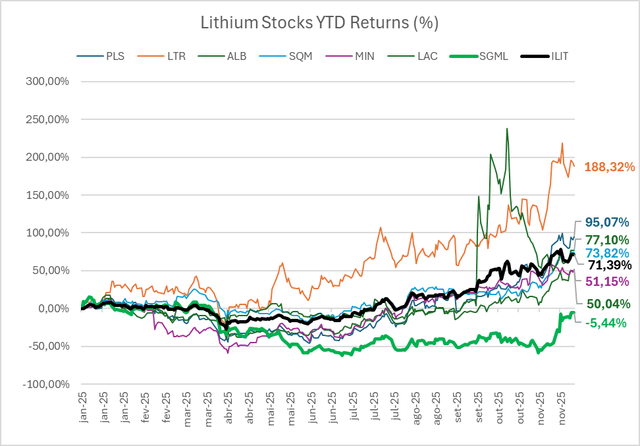
Lithium stocks YTD Returns (%) (Bloomberg)
The table below shows how Sigma is undervalued compared to its peers. Some of the key findings include: The company is expected to have a 2026 EBITDA similar to PLS, despite being worth ⅛ of the Canadian miner EV. LAC, which is a pre operating company, has a higher EV than SGML.
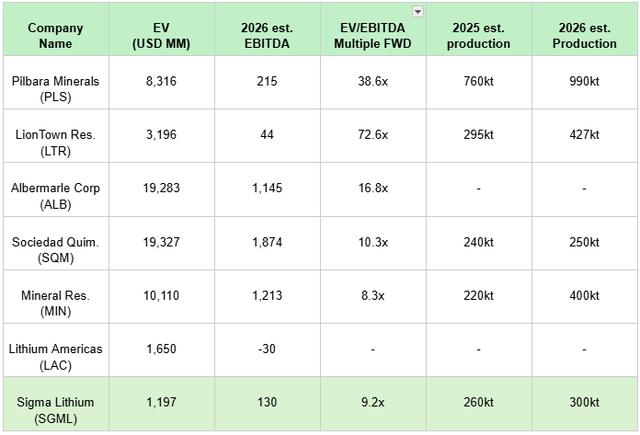
Lithium Peer Analysis (Bloomberg, Author estimates for SGML)
Note that Albemarle Corp (ALB) does not disclose production volumes. Albemarle, along with Sociedad Química y Minera de Chile S.A. (SQM) and Mineral Resources Limited (MALRF) are not pure lithium plays and have other relevant revenue streams. All revenue and volume projections are from Bloomberg, except those for Sigma, which are my projections.
Operations Overview
Sigma has a very high-quality deposit, its AISC is one of the lowest in the world, around $550.
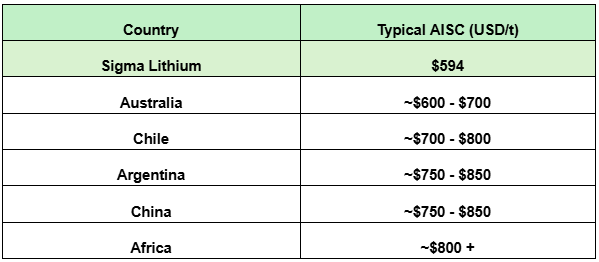
Lithium Miners AISC (S&P Global, Elevra/house research, SGML)
Sigma started construction and commissioning of its facilities in 2022 and production began in 2023. Management plans to expand production in three main phases.
Phase 1 focused on Grota do Cirilio and Xuxa deposits. Commission began in 2022 and production initiated in Q323. Currently, it is fully operational with an annual run-rate of 300kt of lithium oxide concentrate. Total CapEx for the project was $123 million.
Phase 2 focuses on doubling production capacity to 550kt by adding new plant modules and expanding mining at satellite deposits. Total CapEx is projected at $100 million.
In Phase 3, management is still reviewing the project, and is more focused on the sustainability of Phase 1 and Phase 2 operations. It could potentially add an additional 400kt to lithium oxide concentrate production.
Sigma's current developments on the production side have been reassuring. With the stabilization of lithium prices, management has made significant improvements in waste stripping and has renovated mine facilities. The Phase 1 mine, which faced production problems in 2025, is now on track to produce 300kt in 2026.
Management has greenlighted Phase 2, and equipment purchases will begin in early 2026, funded by loans from BNDES (Brazil's development bank) at subsidized interest rates. With these positive developments, I presume SIGMAs production guidance of 300kt in 2026 and 550kt in 2027 is very credible.
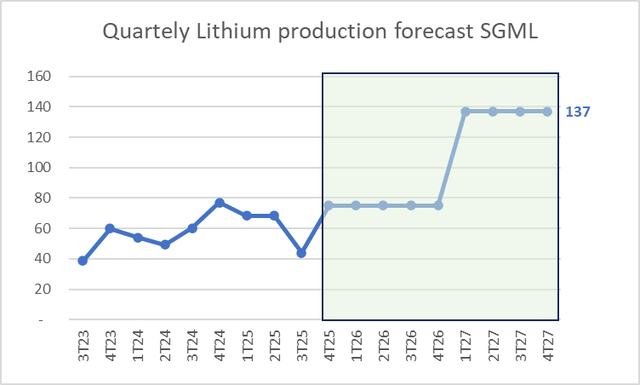
Quarterly Lithium Production Forecast (kt) (Author Estimates)
Market concerns aside, there is also reason to believe Sigma can substantially improve its balance sheet in the next quarters. Despite the current low levels of cash in the Q3 balance sheet, in Q425 there will be significant additions coming from lithium mined in Q3 (+$28 million) and sales of dry staked material in the stockpile (+$33 million). The company is also repaying its debt, and I expect it to cut total loans outstanding from $161 million to around $120 million.
Base Case (+150% Upside By 2027)
I believe Sigma will outperform the market even with conservative assumptions.
The company is on track to reach an estimated EBITDA of ~$253 million by 2027 if Spodumene Prices maintain the current level of $1,100 USD/t and the ramp-up of Phase 2 is successful, reaching a run-rate of 135kt by the begging of 2027. I also assume current unit economics will continue: realized prices 10% below benchmark and an CIF costs of 460 USD/t.
Applying a 12x EV/EBITDA multiple to the forecast EBITDA of $253 million, we reach an enterprise value of $3,036 million, 153% above the current value of $1,197 million.
Bull Case (+600% Upside Longer-Term)
By nature, I consider myself an optimist. It is hard to calculate an exact probability, but I feel there is a possibility that Sigma will deliver above the conservative estimates, bringing significant gains to investors.
Lithium prices could rally further in 2026 given favorable market dynamics described above to at least $1,500. Combined with the successful ramp-up of Phase 2, Sigma could reach an EBITDA of ~$705 million in 2027.
Applying the conservative EV/EBITDA multiple of 12x, Enterprise Value can reach $8,460 million, 607% above current values. While optimistic, this is aggressive. It assumes lithium prices are somewhere close to $1,500/t as previously noted (which is not unheard of for lithium, but the top end of historical volatility peaks, and a 50% increase from today's levels). This is above many estimates, which put it at $1,100 by 2030. Production would also have to be above 300kt. Both of these are distinct possibilities given the rate of lithium demand momentum and likely upswing, and success in Phase 2. Any additional projects that could come down the pike are not factored in, but could also support this case. This also necessitates near perfect operational execution by Sigma.
Catalysts To Watch
News catalysts that could move the needle on Sigma include a rally in Spodumene prices in 2026 with more EV demand and production along with additional uses for lithium (like battery storage) continue to rise.
Improvement in the company's liquidity, position which should show up in Q4 financial statements, could also boost the stock price next quarter.
Sigma reaching its full Phase 1 run-rate of 300kt in early 2026 could spur a stock price upswing, continuing on with the success of Phase 2 expansion, with management maintaining 550kt production guidance for 2027.
Risks To My View
One risk is technology disruptions, which could create alternatives to lithium-ion battery manufacturing. Currently, the most notable example is Sodium-ion batteries. They have a cheaper cost, but have lower energy density and larger size. However, market participants agree that lithium-ion batteries will remain the dominant chemistry at least through the 2030s.
The highest risk in my view is a rapid supply response if prices rally further. In my understanding, China's policy and supply discipline will be maintained in the long term. Nevertheless, if Chinese politicians wake up in a bad mood and change course, market participants note that lepidolite operations in Yinchum could resume full production in a matter of weeks.
Conclusion
All in all, the risks I see are unlikely to materialize and there are numerous avenues for lithium upside from here. Some EV demand projections are about 30% next year, and projections for lithium battery storage indicate a similar growth. Sigma is well positioned to capitalize on this trend, and so I rate it a Buy.

The Government of India is implementing the National Green Hydrogen Mission (NGHM), with an objective to make India a global hub of production, usage and export of green hydrogen and its derivatives.
The following initiatives have been undertaken under the Mission:
MNRE has also advised states to incorporate provisions related to green hydrogen in their policies. Several states have taken proactive steps in this regard, details of which are as follows:
Original content
Chicago Board of Trade soybean futures sagged on Friday and were headed for their first weekly loss in eight weeks amid uncertainty over the scale of Chinese demand for U.S. supplies under a bilateral trade truce. Wheat and corn futures also eased, with ample global grain supplies tempering support from brisk U.S. corn exports. Grain traders were turning their attention to a U.S. Department of Agriculture report due next Tuesday, in which the agency will give an update on global supplies and demand. soybeans to China for shipment in the 2025-26 marketing year, following market chatter about deals this week. In its daily reporting system, the agency has reported sales of about 2.7 million tons of U.S. soybeans to China since October 30. “We need to see those sales converted into shipments and get the bushels out of the country to get some sort of bigger, more sustained rally going,” said Matt Wiegand, commodity broker for FuturesOne.
https://www.tridge.com/news/soy-futures-slide-on-china-demand-doubts-rjyiko
A faster coffee harvest in Vietnam and upcoming Brazilian shipments are pressuring prices, while sugar and cocoa markets face mixed moves on trade and supply shifts.

What’s going on here?
Robusta coffee prices slid to a two-and-a-half-month low, down 1.8% to $4,104 per metric ton, as Vietnam’s harvest rebounded from earlier weather setbacks. Meanwhile, cocoa and sugar markets are each taking their own direction as traders respond to evolving supply and trade dynamics.
What does this mean?
Vietnam’s rapid turnaround in coffee harvesting—after storms and flooding held things up—has sent a wave of robusta beans into the market, putting downward pressure on prices. Brazil is also getting in on the action, with growers focusing on better bean quality as the industry faces price swings and climate uncertainty. Arabica coffee prices slipped 1.75% to $3.6830 per pound, with analysts expecting more declines as shipments from Brazil hit the market. Recent US tariff removals on Brazilian coffee could speed up this supply shift and help rebuild ICE-certified stocks, according to BMI. Over in cocoa, London prices rose 1.8% to £4,131 per ton, helped partly by currency moves, while New York cocoa barely budged. Sugar’s story is mixed: raw prices inched up 0.3% to 14.84 cents per pound as more investors bet on falling prices, but white sugar dipped 0.5%.
Why should I care?
For markets: Supply bumps and policy moves set the tone.
The flood of new coffee supply from Vietnam and Brazil is pushing both robusta and arabica prices lower, and investors are keeping a close watch on ICE coffee stockpiles as US tariffs are dropped. In the sugar market, funds ramped up their bets against price rises, but raw sugar’s resilience hints at ongoing tension between supply optimism and steady demand.
The bigger picture: Weather and policy are rewriting the commodity playbook.
Commodity markets are feeling the impact of shifting weather patterns and policy changes, with ripple effects for global food costs. For cocoa, strong arrivals at Ivory Coast ports suggest a healthy supply now, but there’s mounting concern about slower deliveries in the months ahead. As exporters, growers, and speculators adjust their strategies, the mix of climate uncertainty, regulatory changes, and global demand is reshaping the landscape for coffee, cocoa, and sugar.
https://finimize.com/content/coffee-prices-slip-as-vietnam-speeds-up-harvesting
Standard Chartered also revised its price targets for the crypto through 2029

As bitcoin edged higher Tuesday, Standard Chartered said it now expects the cryptocurrency to end the year higher at $100,000. That’s still a halving of its previous year-end target of $200,000, which was issued in June 2024.
The bank also halved its bitcoin forecast for year-end 2026 to $150,000, from $300,000, and lowered its year-end projections through 2029. But it still expects bitcoin
BTCUSD can reach $500,000 in 2030, according to a Tuesday note by Geoff Kendrick, global head of digital-assets research at Standard Chartered.
Until recently, Standard Chartered was one of the only major banks acting as a custodian of cryptocurrencies for its institutional clients. Unlike stocks, price targets for bitcoin can be few and far between on the Wall Street.
The downward revisions also come as bitcoin has been treading water for the past few days and was trading slightly above $93,000 on Tuesday, almost 26% off its record high of $126,273 reached on Oct. 6. “Price action has forced us to recalibrate our bitcoin price forecasts,” Kendrick wrote.
Of note, Kendrick also said: “We think buying by bitcoin digital-asset-treasury companies (DATs) is likely over.”
Digital-asset-treasury companies are businesses that have adopted a strategy of piling up their balance sheets with crypto — even if historically many of these companies had little or nothing to do with crypto. A fear in markets has been that if these companies start selling crypto, one of the year’s most popular trades could implode.
IBIT, the largest and highest-profile bitcoin-treasury company, defied expectations that it may face difficulties in fundraising by disclosing it had purchased roughly another $1 billion worth of bitcoin last week, its biggest single acquisition since July.
Strategy has been trading below the value of its bitcoin holdings since November, reversing the steep premium it once enjoyed, according to data provider BitcoinTreasuries.net. As of Tuesday, its shares traded at an 11% discount compared with a premium that reached as high as 700% in 2020.
Buying from both digital-asset-treasury companies and bitcoin exchange-traded funds has been one of the main forces driving bitcoin’s price since 2024, according to Kendrick.
But one leg of that demand appears to be weakening. Like Strategy, many other crypto-treasury companies have seen their share prices fall below the value of the crypto assets they hold. That makes additional buying harder to justify and less financially supported as they struggle to raise new financing, according to Kendrick. As a result, he expects buying from this group to stall.
The chart below shows that the aggregate market net asset value of bitcoin-treasury companies — or the aggregate market capitalization of such companies divided by the value of bitcoin they held — has fallen sharply from earlier this year.

PHOTO: THE BLOCK, BLOOMBERG AND STANDARD CHARTERED RESEARCH
Still, Kendrick noted that it remains unlikely Strategy will sell any of its bitcoin.
For smaller digital-asset-treasury companies, Kendrick said the most probable outcome is stabilization rather than selling. These firms are more likely to pause or maintain their current holdings rather than unwind them, he added.
Looking ahead, Kendrick expects bitcoin’s price action to be driven mostly by ETF flows. He expected to see continued ETF inflows over the next several years, supported by broader institutional adoption of bitcoin.
However, near-term flows have been mixed. BlackRock’s iShares Bitcoin Trust
IBIT +2.58%, the largest bitcoin ETF, has logged six consecutive weeks of outflows as of last week — its longest streak of weekly outflows since its debut in January 2024, according to data from CFRA Research. It has still accumulated $25.4 billion in net inflows year to date.
Barrick Mining CA0679011084

The sustained rally in gold prices is creating a favorable environment for major producers, with Barrick Gold positioned to capitalize. However, the Canadian mining giant is not relying solely on commodity tailwinds. Its latest corporate restructuring plan, centered on a potential spin-off of its North American gold assets, is already receiving positive feedback from the market.
Barrick is currently evaluating an initial public offering (IPO) for its core gold operations in North America. The move would involve separating key assets, including the Nevada Gold Mines joint venture, the Pueblo Viejo mine, and the wholly-owned Fourmile project. The company intends to retain majority control, offering only a minority stake to public investors.
Market reaction to the announcement was immediately favorable. Barrick's market capitalization increased by approximately $1.63 billion following the news. In a significant endorsement, analysts at BNP Paribas Exane upgraded their rating on the stock from "Neutral" to "Outperform." Experts point to a dual benefit driving sentiment: exposure to high gold prices combined with anticipated value creation from the corporate simplification.
Concurrently, Barrick has agreed to sell its Tongon mine for up to $305 million, a transaction that further streamlines its global portfolio.
Bullish Fundamentals Provide a Solid Base
Gold continues to trade near record levels, providing a fundamental boost to the entire sector. As of Sunday, December 7, 2025, the precious metal was holding around $4,200 per ounce. This represents an increase of roughly 60% since the start of the year. For a large-scale producer like Barrick, these prices translate directly into expanded profit margins and strengthened cash flow generation. With little indication of a sustained market correction, the medium-term earnings outlook for gold miners remains robust.
Strategy Focused on Unlocking Value
This strategic pivot responds to a growing investor preference for geographically focused mining companies. The market is currently rewarding firms that consolidate assets within specific jurisdictions, thereby enhancing operational transparency and clarity. The planned separation of the North American unit is seen as a direct play on this trend.
The stable, elevated price of gold provides a solid valuation foundation for the new entity. In the coming weeks, further details regarding the timing and structure of the proposed IPO are expected to be a primary catalyst for Barrick's share price performance.
Silver and copper have replaced gold as the hot metal trade heading into 2026, with institutional and retail traders positioning for record rallies.
Silver has nearly doubled this year, with most gains occurring in the past two months due to a historic supply squeeze in the benchmark London market amid surging demand from India and silver-backed exchange-traded funds. While that crunch has eased in recent weeks as more metal is shipped to London vaults, other markets have seen supply constraints: Chinese inventories are at decade lows.
The silver rally has seen higher volatility, said Ed Meir, an analyst with Marex Group Inc. “If you look at the chart, there’s been a steeper parabolic move up than seen in previous rallies. The buying is much more concentrated, and in a much shorter time frame.”
Silver has outpaced gold of late. Since bullion hit a record on Oct. 20, it’s moved mostly sideways, while silver has gained more than 11% to a fresh record and copper has climbed almost 9%.
Implied options volatility in the iShares Silver Trust, the biggest ETF tracking the metal, rose last week to the highest since early 2021, when for a brief period silver attracted meme-stock traders. Almost $1 billion flowed into the ETF over the past week, exceeding the influx into the largest gold fund and adding further support to spot prices.
Western investors — who have been significantly under-allocated to precious metals — have flocked to silver ETFs in recent months, and there’s significant room for further inflows as allocation normalizes, said Trevor Yates, a senior investment analyst at Global X ETFs.
Options on Comex silver futures have also faced a buying spree amid demand for protection against wider swings and especially further rallies. Retail traders are pouring into the market — five-day average volume on micro futures contracts is at a level only exceeded in mid-October, CME Group Inc. data show.
One example of the fervor is lottery-ticket style options: more than 5,000 lots of Comex silver February $80/$85 call spreads — equivalent to 25 million troy ounces — changed hands on Wednesday and Thursday, building up a position to profit from a feverish rally to start the new year.
https://finance.yahoo.com/news/silver-copper-eclipse-gold-top-143000841.html

Dec 11 (Reuters) - Gold edged lower on Thursday, as traders weighed the U.S. Federal Reserve's divided vote on a quarter-percentage-point interest rate cut, while silver climbed to yet another record high.
Spot gold fell 0.3% to $4,217.09 per ounce, as of 1111 GMT. U.S. gold futures for February delivery gained 0.5% to $4,244.70 per ounce.
"It's just an overpositioning (in gold) in expectation of the rate cut, which did happen, and therefore you're seeing some selling pressure," said independent analyst Ross Norman, adding that gold's fundamentals remained intact.
Featured
Commodity Intelligence Year Ahead Series: A Historic Year for Gold: Could Prices Climb Higher in 2026?

By Piero Cingari
Published on 09/12/2025 - 7:00 GMT+1
Gold soared over 60% in 2025, driven by geopolitical risks, rate cuts, and central bank demand. Many experts see further upside in 2026, with gold's role as a safe-haven asset still firmly intact.
After a historic 2025 that saw gold soar over 60% and break more than 50 record highs, investors are now turning their attention to whether the precious metal can sustain its upward trajectory into 2026.
Despite leading major asset classes in year-to-date performance, putting it on track for its best year since 1979, experts think gold may still have room to climb next year. Others warn that risks remain.
Unlike previous years when single events dominated gold’s trajectory, this year saw multiple drivers at play.
Sustained central bank buying, persistent geopolitical friction, elevated trade uncertainty, lower interest rates, and a weakening US dollar all combined to fuel demand for the metal as a safe-haven asset.
According to the World Gold Council’s latest report, geopolitical tensions contributed roughly 12 percentage points to year-to-date performance, while dollar weakness and slightly lower interest rates added another 10. Momentum and investor positioning accounted for nine points, with economic expansion contributing a further 10.
Central banks also continued to buy aggressively, keeping official-sector demand well above pre-pandemic norms.
Forecasts from the World Gold Council
Looking ahead, the Council expects many of the forces that powered gold’s extraordinary rally in 2025 to remain relevant in 2026.
However, the starting point is now fundamentally different. Unlike at the beginning of 2025, gold prices have already priced in what the WGC describes as the “macro consensus”. That's expectations of stable global growth, moderate US rate cuts, and a broadly steady dollar.
In this environment, the Council notes that gold appears fairly valued. Real interest rates are no longer falling significantly, opportunity costs are neutral, and the strong positive momentum seen in 2025 has begun to fade.
Investor risk appetite remains balanced, rather than tilting decisively toward caution or exuberance.
As a result, in its baseline scenario, the WGC sees gold trading within a narrow range in 2026, with performance likely limited to between –5% and +5%.
But the outlook is far from settled, as three alternative scenarios could shape a different path.
In a "shallow economic slip" — characterised by softer economic growth and additional Fed rate cuts — gold could rise by 5% to 15% as investors shift toward defensive assets, extending the gains of 2025.
In a deeper economic downturn, or "doom loop," gold could rally by 15% to 30%, fuelled by more aggressive monetary easing, declining Treasury yields, and strong safe-haven flows.
Conversely, if the Trump administration’s policies succeed in reigniting growth, a reflation return would likely push yields and the dollar higher, diminishing gold’s appeal.
Under this bearish scenario, gold could decline by 5% to 20%, particularly if investor positioning reverses and central bank demand weakens.
Predictions from Wall Street
Despite a more measured outlook from the WGC, major investment banks continue to predict further upside for gold in 2026.
J.P. Morgan Private Bank projects prices could reach between $5,200 and $5,300 per ounce, citing strong and sustained demand as a key driver.
Goldman Sachs forecasts gold at around $4,900 per ounce by the end of next year, supported by continued central bank buying.
Deutsche Bank offers a wide range of $3,950 to $4,950, with a base case near $4,450, while Morgan Stanley anticipates prices closer to $4,500, although it warns of near-term volatility.
Supporting this optimism is the ongoing accumulation of gold by central banks, particularly in emerging markets, as well as the view that many institutional investors remain underexposed to the metal.
The potential for lower real yields, coupled with global macro risks, continues to make gold attractive as a portfolio hedge.
Nonetheless, risks could cap further gains. A stronger-than-expected US recovery or a rebound in inflation could force the Federal Reserve to delay or reverse rate cuts, boosting real yields and the dollar, two classic headwinds for gold.
A slowdown in ETF flows or central bank purchases could also dampen demand, while increased recycling, particularly in India where gold is used as collateral, could raise supply and weigh on prices.
A constructive path forward
While a repeat of 2025’s extraordinary 60% surge appears unlikely, gold enters 2026 on solid footing.
The fundamental drivers such as macroeconomic uncertainty, central bank diversification, and gold’s role as a hedge against volatility remain intact.
In a world increasingly defined by unpredictability, gold continues to offer investors not just returns, but resilience. The metal may no longer be in the early stages of a rally, but its role as a strategic anchor in uncertain times is far from diminished.
Looking at both the UK and US stock markets right now, it seems a lot of investors are growing nervous of a potential correction or even a full-blown crash in 2026. And it’s easy to understand why.
That’s obviously pretty scary. Yet despite these doomsday signals, I’m still drip feeding money into both UK and US stocks. Here’s what I’ve been buying and why.
Don’t try to time the market
Hindsight is 20/20, and it’s easy to look back at previous market downturns and say: “If only I had sold/bought when prices reached the top/bottom”.
However, this often leads novice and even expert investors into the trap of thinking they can successfully time the market the next time.
The reality is, in the short term, the stock market’s near-impossible to predict. And there are countless examples of investing legends like Michael Burry or Jeremy Grantham calling for catastrophes that never materialise, resulting in massive opportunity costs.
Instead, history’s shown that the best performers are those who remain invested and continue to top up their positions if volatility does indeed rear its ugly head. With that in mind, here’s what I’m doing now.
Balancing risk with potential reward
I would be lying if I said the current investing environment doesn’t make me a little nervous. And I’ve subsequently increased my portfolio’s cash position as a hedge against potential volatility. But I’m also still deploying capital where opportunities emerge.
Even with stock markets near record highs, there are still plenty of under-the-radar bargains to explore. And one that I’ve recently taken advantage of is Ecora Resources (LSE:ECOR).
The business specialises in providing alternative financing solutions for mining enterprises, to help get shovels in the ground in exchange for a small lifetime royalty. It’s certainly a niche business. But it’s one that some of the largest mining companies rely upon, including Rio Tinto, BNP, and Vale, among others.
What makes Ecora interesting right now is the firm’s strategic pivot away from coal towards critical metals such as copper, cobalt, and nickel. 2025 marks the first year in the company’s history where these metals contributed more than 50% of revenue, on track to reach 85% by 2030.
Copper’s now the new heart of Ecora’s portfolio. And with demand expected to vastly outpace global supply over the next decade, management’s investments over the last five years are starting to pay off at an accelerating pace.
Obviously, investing even in a royalty resources business comes with risks. If the supply/demand dynamics of copper fail to materialise, Ecora’s growth trajectory could be disrupted. And even if that doesn’t happen, unexpected production delays across its portfolio of projects could still hamper progress, likely resulting in share price volatility.
Nevertheless, while Ecora shares have already more than doubled since April, they remain massively undervalued compared to this medium-to-long-term growth opportunity, in my opinion. That’s why I’ve already snapped up some shares for my own portfolio.
https://uk.finance.yahoo.com/news/don-t-care-stock-market-075100028.html
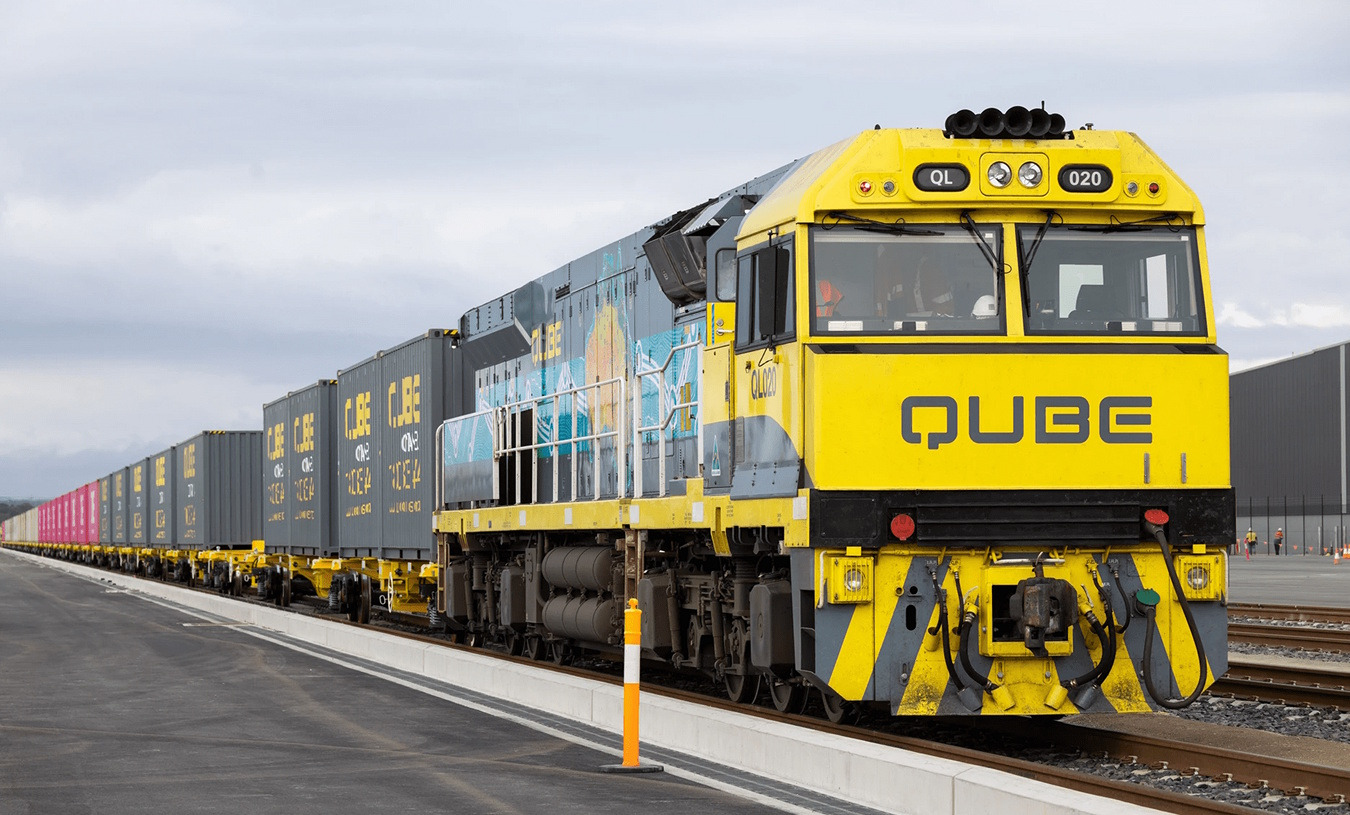
Image: Qube Holdings
The Townsville to Mount Isa rail line remains closed following a derailment of a mineral freight train on Friday afternoon. Queensland Rail (QR) confirmed that one locomotive ended up on its side, while two others left the track but remained upright. A single wagon also derailed but stayed upright.
The incident occurred at Warrigal, located between Pentland and Torrens Creek, around 1pm. The train, operated by Qube Holdings, was transporting zinc and copper from Mount Isa. Emergency services, including State Emergency Service volunteers, were dispatched in case of a major fuel spill, though no such issue was reported.
Freight and passenger services along the line were suspended over the weekend, and QR has advised that weekend Inlander passenger services will be replaced by buses. Track assessments are ongoing as authorities develop a recovery plan.
QR head of regional operations Scott Cornish said:
"Emergency services arrived onsite soon after. Thankfully no injuries were reported. Queensland Rail will work with the third-party operator to confirm a recovery plan once inspections are completed."
Qube Holdings added:
"Recovery efforts are continuing at the site, and we are naturally working with relevant agencies to support investigations into the cause of the incident."
Posted on 8 Dec 2025

XCMG Machinery says it has commenced the shipment of a fleet of 230 t diesel-electric drive XDE260 mining trucks from its intelligent manufacturing base in Xuzhou, China. The equipment is destined for the SimFer operated mine, which is extracting Blocks 3 & 4 of the Simandou iron ore project in Guinea, West Africa, with Winning Consortium Simandou mining Blocks 1 & 2.
The Chinese OEM said it marks a significant milestone, showcasing Chinese manufacturing excellence at the world’s largest untapped high-grade iron ore reserve. SimFer SA is a joint venture between Rio Tinto, CIOH (a Chinalco-led consortium), and the Government of Guinea. XCMG: “This shipment signifies that XCMG and Rio Tinto are working together more closely than ever, deepening their collaboration in the field of high-end mining equipment.
The delivery is part of a major equipment supply contract valued at nearly RMB 800 million signed in 2024, including the provision of large-capacity mining trucks, motor graders, and select auxiliary equipment.
“This collaboration is a profound partnership based on our shared commitment to sustainable development,” said Yang Dongsheng, Chairman of XCMG. “XCMG has always been driven by technological innovation, striving to provide global clients with smarter, more environmentally friendly integrated solutions.”
The newly delivered XDE260 mining truck is one of XCMG’s flagship models and these particular units have been engineered specifically for West Africa’s operating conditions, aimed at to maximising productivity while minimising environmental impact.
To ensure optimal operational efficiency, XCMG has deployed a dedicated service team of over 100 specialists, offering localised, round-the-clock technical support. “A multinational expert team from China, Guinea, and Australia is benchmarking against global best practices in mining operations, ensuring the Simandou mine achieves its planned production capacity efficiently and sustainably throughout its lifecycle.”
According to a spokesperson for XCMG Simandou Company, in addition to delivering advanced mining equipment, XCMG will expand cooperation in vocational education and professional training. “Together, we aim to fulfil our shared social responsibilities and empower local employees by enhancing their skills and fostering career development,” the spokesperson said.
XCMG concluded: “From exporting high-end mining machinery to integrating China’s intelligent manufacturing capabilities with international standards, XCMG is accelerating its evolution – from global expansion to sustainable market leadership. Moving forward, XCMG will remain innovation-driven and customer-focused, providing robust support for the mining industry’s low-carbon transition and helping shape a more sustainable future for global resources.”
https://im-mining.com/2025/12/08/xcmg-230-t-class-mining-trucks-depart-for-simandou-project/

Zambia aims to more than triple its copper production to 3 million tonnes per year by 2031 as new projects advance. This expansion aligns with rising exploration spending driven by juniors such as Koryx Copper.
Koryx Copper announced in a December 5 statement that it intends to launch its first drilling programs in 2026 on its Luanshya West and Mpongwe copper projects in Zambia. The update comes as the company continues to advance the Haib copper project in Namibia and signals its plan to accelerate its investments in the red metal across Africa.
Haib stands as Koryx’s flagship asset. The project can produce 88,000 tonnes of copper annually over a 23-year mine life, based on an estimated $1.55 billion investment. The company plans to optimise these metrics in the coming months following the preliminary economic assessment (PEA) it released in September. Koryx expects its development efforts to extend to its Zambian assets during the same period.
Koryx plans to use the Luanshya West drilling program to test several targets identified during 2025 fieldwork. At Mpongwe, the company plans to analyse results from a sampling campaign before launching follow-up drilling in the second quarter of 2026. The company currently controls 51% of both Zambian projects, which sit in the Copperbelt region that hosts major mines such as Kansanshi and Sentinel operated by First Quantum Minerals.
These initiatives position Koryx Copper to play a growing role in Zambia’s mining sector, which stands as Africa’s second-largest copper producer after the Democratic Republic of Congo. The announcement also comes during a strong year for the metal. Trading Economics data show that copper prices rose about 30% since January and traded at $5.4 per pound.
Koryx has not yet disclosed the cost or scope of the upcoming exploration campaigns. The company raised C$25 million (about $18 million) at the end of July to support its plans. Unlike Haib, the Zambian projects remain at an early stage, and the discovery of an economically viable deposit remains uncertain.
This article was initially published in French by Aurel Sèdjro Houenou
Adapted in English by Ange Jason Quenum
08 December 2025 09:34:35
The FTSE 100 miner had sought approval to amend its 2024 and 2025 long-term incentive plans to guarantee a minimum vesting of 62.5% of share awards for chief executive Duncan Wanblad and other top executives if the Teck merger were completed.
The proposed changes, worth an estimated £8.5 million for Wanblad, drew criticism from major investors and proxy advisers, including Legal & General Investment Management and Institutional Shareholder Services, which said the guaranteed payouts undermined performance-based criteria and represented poor governance practice.
After what it described as “extensive discussions” with shareholders, Anglo said the pay amendment had been removed from the resolutions to be voted on at Tuesday’s meeting, where shareholders would decide only on the allotment and issue of new shares linked to the Teck deal.
The company added that it would continue to engage with investors on executive remuneration ahead of its 2026 annual meeting.
Analysts at Peel Hunt said the withdrawal of the bonus proposal “should ensure strong backing” for the merger itself, the Financial Times reported.
The merger with Teck, valued at between $50bn and $53bn, would create one of the world’s largest producers of mined copper and mark another step in Anglo’s broad restructuring, which included plans to offload De Beers and its coal, nickel and platinum divisions.
The new group, to be renamed Anglo Teck, would be headquartered in Vancouver and listed in both London and Johannesburg.
Anglo stressed that the combination “does not change South Africa’s sovereignty, operations or obligations” and that it remained “deeply committed” to its South African businesses, including Kumba Iron Ore.
The company said the enlarged group would continue investing in projects such as the ZAR 11bn (£486.46m) UHDMS expansion at Kumba and contribute ZAR 600m to the Junior Mining Exploration Fund.
At 0918 GMT, shares in Anglo American were down 0.67% in London at 2,960p.
Reporting by Josh White for Sharecast.com.
https://www.investments.halifax.co.uk/research-centre/news-centre/article/?id=21340999&type=bsm

The Democratic Republic of Congo (DRC) is accelerating the adoption of advanced technologies to streamline mineral exploration, boost production and enhance worker safety. In December 2025, the country signed a Strategic Partnership Agreement with the U.S, under which American companies will provide technical assistance, funding and technology to optimize the mining value chain. With an estimated $24 trillion in mineral reserves and 90% of the DRC’s mineral reserves undeveloped, technology will play a critical role in strengthening the country’s position as a global supplier of critical minerals.
In addition to the agreement signed with the U.S., the DRC entered a series of partnerships with global entities to enhance technology rollout across the mining sector. The country selected Japanese technology firm Solafune to integrate an AI-based geo-mapping solution within its nation-wide mineral mapping program. State agency the Mining Cadaster also announced the rollout of AI-enabled drones to improve surveillance and oversight of mining activities. The DRC also partnered with U.S. startup KoBold Metals to implement data-driven exploration projects across lithium, copper and cobalt sites, including the Manono Lithium Project. KoBold Metals will digitize the country’s historical geological archives, enabling enhanced access to critical data that will support project development with international partners. With the DRC seeking to capitalize on the growing global demand for critical minerals, these initiatives will help identify the location, quantity and quality of mineral deposits, enabling faster and more targeted resource exploitation to drive GDP growth.
Meanwhile, the DRC is using technology to curb illicit mineral trading. The country launched E-Trace, a digital mineral traceability platform designed to ensure responsible and sustainable mining practices, track minerals and integrate proceeds into the formal economy. Furthermore, with worker safety central to the sustainable growth of the industry, project operators are enhancing the safety of their operations with AI-enabled solutions. For instance, mining company Glencore is using technology company Sandvik’s proximity detection and collision avoidance technology to detect and avoid collision across its underground operations.
As the DRC continues to roll out tech-enabled mining initiatives, the upcoming African Mining Week, scheduled for 14–16 October 2026, will bring together global tech providers and DRC mining stakeholders. The event will feature high-level panels and project showcases, highlighting technological innovation across the mining value chain and emerging opportunities across the DRC’s mining sector.
https://energycapitalpower.com/u-s-agreement-accelerates-drcs-tech-enabled-mining-growth/

Anglo American (OTCMKTS:NGLOY) has received a consensus rating of “Moderate Buy” from the seven research firms that are covering the stock, MarketBeat reports. Four investment analysts have rated the stock with a hold recommendation, one has issued a buy recommendation and two have given a strong buy recommendation to the company. The average 12-month price target among analysts that have issued a report on the stock in the last year is $20.00.
NGLOY has been the topic of several research analyst reports. Citigroup reissued a “neutral” rating on shares of Anglo American in a research note on Friday, September 26th. DZ Bank cut shares of Anglo American from a “strong-buy” rating to a “hold” rating in a report on Thursday, September 11th. Finally, Berenberg Bank set a $20.00 target price on Anglo American in a report on Wednesday, October 8th.
Anglo American Stock Down 1.7%
Shares of NGLOY opened at $19.55 on Tuesday. Anglo American has a one year low of $12.70 and a one year high of $20.46. The stock’s fifty day moving average is $18.96 and its 200-day moving average is $16.53. The company has a debt-to-equity ratio of 0.59, a current ratio of 2.11 and a quick ratio of 1.65.
Anglo American Company Profile
Anglo American plc operates as a mining company in the United Kingdom and internationally. It explores for rough and polished diamonds, copper, platinum group metals and nickel, steelmaking coal, and iron ore; and nickel, polyhalite, and manganese ores. Anglo American plc was founded in 1917 and is headquartered in London, the United Kingdom.

Anglo American has received shareholder approval to merge with Canada’s Teck Resources, creating the Canada-headquartered Anglo Teck.
Anglo American is currently an England-based multinational, with origins tracing back to 1917 in South Africa.
The company initially started mining gold, but later expanded into diamonds, coal and other minerals.
It’s only South African operations now sit with Kumba Iron Ore, following the unbundling of Anglo American Platinum, now Valterra Platinum, earlier this year.
Amid fending off takeover bids from its rival BHP, Anglo American announced a merger of equals with Teck Resources.
Under the deal, Anglo shareholders will hold approximately 62% of the company, while Teck shareholders will receive the remaining shares.
Anglo will also pay a special dividend of approximately $4.5 billion to mitigate the impact of the deal.
99% of Anglo shareholders supported the deal last week, with Teck’s shareholders now also approving the deal.
“We are extremely pleased to have received such strong support both from shareholders and stakeholders alike,” said South African-born CEO of Anglo American, Duncan Wanblad.
“Today marks a major milestone towards forming Anglo Teck – a global critical minerals champion, headquartered in Canada, and a top five global copper producer.”
With the increased push into electrification across the globe, many miners are pushing looking to grow their copper resources.
“Bringing together the best of both companies, Anglo Teck is set up to deliver outstanding value for shareholders of both companies,” said Wanblad.
“Looking ahead, we will continue to work closely with Teck and the regulatory authorities across various jurisdictions during the course of 2026 to obtain the necessary approvals to progress towards completion.”
Completion of the merger remains subject to conditions customary of a transaction of this nature.
As per the deal, Wanblad will relocate from London, UK, to Vancouver, Canada. Anglo Teck is expected to be worth $53 billion following the merger.

Duncan Wanblad, Anglo American CEO, and Jonathan Price, Teck President and CEO.
Islamabad, Dec 10 (PTI) The Trump administration has approved USD 1.25 billion in US Export-Import (EXIM) Bank financing for Pakistan's Reko Diq copper-gold mine in restive Balochistan, the mineral-rich but poor province hit by militancy and insurgencies.
In a video message posted on X on Wednesday, US Charge d'Affaires in Islamabad Natalie Baker said that EXIM Bank would invest up to USD 2 billion in Pakistan to support the mining sector.
"I'm pleased to highlight the US Export-Import Bank recently approved financing of USD 1.25 billion to support the mining of critical minerals at Reko Diq in Pakistan," Baker said, sharing details of the planned investment.
“In the coming year, EXIM’s project financing will bring in up to $2 billion in high-quality US mining equipment and services needed to build and operate the Reko Diq mine, along with creating an estimated 6,000 jobs in the US and 7,500 jobs in Balochistan,” she said.
She said the Reko Diq mine "serves as the model for mining projects that will benefit US exporters, as well as local Pakistani communities and partners".
Baker said the initiative aligns with the Trump administration's approach to emphasise commercial partnerships. "The Trump administration has made the forging of deals exactly like this one central to American diplomacy," she noted.
She added that Washington looks forward to further agreements between American companies and their Pakistani counterparts in the critical minerals and mining sector, describing the project as one that aims to "bring employment and prosperity to both our nations."
Reko Diq is a key copper-gold mine in the Balochistan province, featuring vast, undeveloped deposits. A partnership has been agreed between Barrick Gold Mining company and Pakistan's federal and Balochistan provincial governments, targeting first production in 2028.
The announcement by the US diplomat comes as Washington aims to expand its search for minerals.
Pakistan and US relations have improved in the wake of a brief clash between Pakistan and India, after Islamabad credited Donald Trump for the ceasefire and also nominated him for the Nobel Peace Prize.
https://www.theweek.in/wire-updates/international/2025/12/10/fgn51-pak-us-exim.html

The critical minerals to be produced at Gonneville are essential to the auto and defence sectors, data centres and many rapidly growing decarbonisation applications.
Chalice Mining’s (ASX: CHN) pre-feasibility study has been completed for the Gonneville palladium-nickel-copper project in WA, confirming a 23-year open pit phase.
Gonneville is set to become Australia’s first primary platinum group metal (PGM) mine and second largest nickel mine, producing an average of 220kozpa of 3E precious metals (palladium, platinum and gold), plus 7ktpa of nickel, 8ktpa of copper and .7ktpa of cobalt.
This would help diversify global supply as about 93% of current PGM supply comes from Russia, South Africa and Zimbabwe.
According to Chalice, about 50% of the resource remains unmined (about 7.9moz 3E, 450kt nickel, 250kt copper, 46kt cobalt contained).
Chalice managing director and chief executive Alex Dorsch says the PFS is a major milestone for the company and highlights its plan to develop a major critical minerals mine.
“The study demonstrates that Gonneville is viable and will generate solid returns, even at bottom of the cycle prices,” he said.
“The project development plan has been dramatically simplified, with a two-stage open-pit and conventional concentrator-leach process flowsheet, which with recent improvements and optimisations in the PFS have underpinned a low-risk and financially strong study.”
The initial two-stage open pit phase could generate cumulative free cashflow pre-tax of $4.7b, increasing to $6.2b at spot prices, according to Chalice.
Chalice chief operating officer Dan Brearley comments on the project.
“We now will progress the feasibility study, the next stage of regulatory approvals and continue to de-risk the project through engineering,” he said.
“It’s a very exciting time for our team and we have come a long way in just over 5 years since our discovery.”
Chalice plans to employ a primarily residential workforce with 1200 FTE construction jobs in Stage 1 (2028-2029) and Stage 2 (2033) and 500 FTE operations jobs for 23+ years (2029+).
Direct royalties and taxes to state and federal government are anticipated at $1.5b.
https://australianminingreview.com.au/news/chalice-confirms-4-7b-critical-minerals-development/
By Yuka Obayashi
Japanese buyers are expected to pay aluminium premiums of $85-$203 per metric ton in 2026, as higher overseas premiums reduce flows to Asia and tighten supply, trading house Marubeni Corp 8002 said on Wednesday.
Japan is a major aluminium importer in Asia and the amount it agrees to pay for primary metal shipments each quarter above the London Metal Exchange cash price (CMAL0) sets the benchmark for the region.
Sluggish demand and ample supply have pushed down Japanese premiums to $86 per ton (PREM-ALUM-JP) this quarter, compared with $228 in January-March.
But in negotiations for next January-March shipments that started earlier this month, global suppliers have offered premiums of $190-$203 per ton over the benchmark price, up 121%-136% from this quarter, two sources directly involved in the talks said.
Marubeni, one of Japan's largest aluminium traders, forecast Japan premiums of $140-$203 per ton in January-March, $125-$200 in April-June and a range of $85-$175 for the rest of 2026.
IMPACT OF US TARIFFS ON PREMIUMS
"Premiums in Europe and the United States are soaring amid supply concerns and tariffs, raising fears of reduced flows to Asia and lifting Japanese spot premiums in recent weeks," said Eisuke Akasaka, general manager at Marubeni's light metals section. Spot premiums have climbed to nearly $140, he noted.
Akasaka said an outage at a smelter in Iceland, expectations of the possible mothballing of South32's S32 Mozambique aluminium smelter and front-loading ahead of a new carbon tax under the EU's Carbon Border Adjustment Mechanism have boosted European premiums. U.S. premiums have surged because of steep import tariffs.
Akasaka said he expected European premiums to ease in the second half of 2026 as underlying demand remains weak, which would lead to a slight decline in Japanese premiums over the same period.
Featured
First Quantum - An Asymmetric Bet?

First Quantum’s Kansanshi mine in Zambia. (Image from First Quantum Minerals)
First Quantum Minerals (TSX: FM) has commissioned the long-awaited $1.25 billion expansion at its Kansanshi copper mine in Zambia, delivering the country’s largest copper investment in nearly a decade.
The S3 project, first proposed in 2012, includes a new processing plant that nearly doubles Kansanshi’s ore-milling capacity, expands smelter throughput by about 25% and opens up a new pit for mining.
Commissioning of the expansion begins Tuesday, three years after securing board approval, as reported by Bloomberg.
Once Africa’s biggest copper mine, Kansanshi is set to produce an average 250,000 tonnes of copper annually through 2044, up from 171,000 tonnes in 2024. The expansion will bolster Zambia’s mining industry as President Hakainde Hichilema seeks to more than triple national copper output by the early 2030s.
First Quantum’s investment comes as competitors also bet on Zambia’s copper future. Barrick (TSX: ABX, NYSE: B) is investing $2 billion to expand its Lumwana copper mine, also in the mineral-rich North-Western Province.
Strategic lifeline
For First Quantum, the Zambian expansion provides much-needed production growth following 2023’s closure of the $10 billion Cobre Panamá mine, which had been the Canadian miner’s flagship operation. The shutdown, ordered by Panama’s Supreme Court, has cost the company roughly $20 million per month in care and maintenance expenses.
With Cobre Panamá offline, Zambia now accounts for more than 90% of First Quantum’s output through Kansanshi and its nearby Sentinel mine. Together, these operations contribute more than half of Zambia’s total copper production, reinforcing the country’s reliance on the red metal for over 70% of export earnings.
On Tuesday, the copper producer issued an update to its 6.875% 2027 senior notes, relaying that bond holders sold $714 million (C$989 million) back to the company, with an outstanding amount of nearly $35.4 million remaining in the market.
Also this month, the miner commenced an offer to purchase outstanding 9.375% senior secured second lien notes due in 2029 up to a maximum of $250 million, and it issued a new bond, increasing the amount to $1 billion from the original $750 million, offering it at a rate of 7.25% with a term to 2034.
“These bond market moves are unrelated to the increased costs of maintaining Cobre Panama,” a company spokesperson said by email on Wednesday.
“These costs will be met principally by the sale proceeds of the copper concentrate that we recently shipped from Cobre Panama.”
Shares in First Quantum closed 1.8% weaker on Tuesday in Toronto but have gained 21% this year to $22.98 apiece, valuing the company at $19.2 billion.
An earlier version of this story incorrectly stated that First Quantum had added $714 million to its debt. Mining.com regrets the error.
https://www.mining.com/first-quantum-commissions-1-25b-zambia-copper-expansion-amid-debt-push/
Commodity Intelligence Comment - Thu 07:29, Aug 21 2025
"For First Quantum, the Zambian expansion provides much-needed production growth following 2023’s closure of the $10 billion Cobre Panamá mine, which had been the Canadian miner’s flagship operation."
First Quantum is in strategic limbo. Yet our view at Commodity Intelligence is that the company just needs to establish exactly what is happening to earn a re-rating, rather than one specific outcome.
With its flagship Cobre Panamá mine closed, the company's focus has shifted almost entirely to its Zambian assets, which now account for more than 90% of its copper output.
We see the outcome as fairly positive for shareholders. The company is taking proactive steps to manage its debt load, and the debt market is signalling that it is broadly comfortable with the risk of funding the S3 project. This follows the $1bn gold streaming deal a couple of weeks ago.
Shares have been weak during the last few sessions. We think that managing debt whilst you can and not too late is a smart move, however the equity market is taking it as a sign that First Quantum is restructuring its finances to survive without its largest asset. This shows how different capital markets can react to the same event, yet we think it is far too early to conclude that Cobre Panama is a lost cause.
Rather than any debt discomfort, what First Quantum needs to avoid is walking away from Cobre Panama for cents in the dollar. Long time analysts of the company will remember them walking away from the DRC assets in exchange for $1.25bn to Eurasian Resources. They walked away from $16bn of contained copper (on our estimates, gross in situ) at today's prices at Frontier. This allowed them enough liquidity to develop Kansanshi, but at an opportunity cost.
This buys them time to negotiate, and that's a welcome development. What is unwelcome is the sense from Panama that not only has the company moved quickly to restructure its finances, the President is now signalling that a decision has been delayed. Reports suggest that a supplier who has met President Mulino was told that the country will not make a decision until the country has dealt with social security reform.
We see this as a negative catalyst in the short run, as markets dislike uncertainty. However, a multi year view remains more positive. The First Quantum investment case is in an air pocket where several facts need to be established. The outcome is likely to be positive in the long run, yet the market needs clarity on whether the company will fully refocus on 1) Zambia with an expanded Kansanshi and further opportunities to come, 2) look for a trade buyer, or 3) resume operations with its key asset, Cobre Panama, still in place.
We think that investor preference would be 3,2,1 on the long term strategy. management may be leaning towards 1,3, and discounting 2 unnecessarily.
This is an asymmetric investment case now. If Panama does not come back, there's little downside. If it does, there's probably $6-7bn NPV there. If it was ever confirmed that Panama is lost, there would be a chorus of investors asking for a sale of the company. We commend it for this reason.
The financial profile also gives reason for optimism in the equity investment case. The new cash flow from S3 would not "transfer to equity" but it would be used to clear the debt, which in turn could reduce risk perceptions and increase the value of the equity.
Featured
Commodity Intelligence Year Ahead Series - Copper Market

Soaring copper orders from South Korea and Taiwan led to the biggest rise in requests for withdrawals from London Metal Exchange warehouses since 2013, pushing copper prices to a new record high on Wednesday.
The price of copper increased by another 2.4% on the London Metal Exchange (LME) early on Wednesday, to exceed $11,400 per ton, which beat the previous record high from just two days ago.
Copper prices have jumped by around 30% so far this year, with the gains mostly occurring in the second half, amid a series of supply issues in key producing countries and speculation about potential U.S. import tariffs.
This year, copper prices have rallied amid threats from the Trump Administration to impose tariffs on the industrial metal crucial for electrification and grid expansion. Trump backed off plans for a tariff, for now, but traders are nevertheless amassing copper into the U.S., which has hiked copper prices at the Comex exchange in New York and shrunk supply elsewhere in the world.
Demand signs have become more bullish in recent weeks, with economies faring better than expected in the tariff chaos of the Trump Administration.
The price of the metal, which is used in industry, electronics, electrification, and construction, is often viewed as a gauge of economic health.
On the supply side, several accidents at mines in Chile and Indonesia earlier this year have reduced global copper production and tightened the physical market.
In recent weeks, traders have been aggressively positioning for deeper deficits next year, analysts and industry executives said at a Fastmarkets webinar last week.
The macro trends will be key for copper markets and pose the biggest uncertainty to demand and prices in 2026, they noted.
“The macro overview matters the most, because the macro then essentially moves the demand numbers,” said Scott Crooks, principal analyst at Chile’s state copper mining giant CODELCO.
“It’s the tweets, policies that come out of different countries as they try and realign in this new world we live in. I think that is what’s really going to move the needle.”
Commodity Intelligence Comment - Thu 08:46, Dec 04 2025
"This year, copper prices have rallied amid threats from the Trump Administration to impose tariffs on the industrial metal crucial for electrification and grid expansion. Trump backed off plans for a tariff, for now, but traders are nevertheless amassing copper into the U.S., which has hiked copper prices at the Comex exchange in New York and shrunk supply elsewhere in the world."
COPPER 2026: THE YEAR OF CONSEQUENCE
2025 Review: The Year of Dislocation
2026 Outlook: The Year of Physical Deficit
2025 was a year of two halves for copper. The first half was defined by dislocation, as Trump’s tariff threats caused a massive logistical scramble that flooded material from the LME and Shanghai into Comex warehouses. While global aggregate supply was sufficient, the location of that supply created artificial tightness in Europe and Asia. Although the tariffs were paused, the scene was set. In the second half, the narrative shifted from logistics to geology. The market became genuinely short.
The Supply Casualties of 2025
We flagged the Grasberg risk early, and it proved far more severe than the consensus anticipated. The September 8th "mud rush" was a catastrophic event for the block cave, triggering an immediate suspension that we believe will bleed well into 2026. But Grasberg was not an isolated incident; the industry suffered a cascade of failures. Kamoa-Kakula in the DRC saw a major seismic event wipe 150,000 tonnes from guidance, with 2026 production fully 200,000 tonnes below where it was planned as compared to the original strategic baseline.
While remediation is underway and noting the recent press release from Ivanhoe, we remain sceptical that full operational rates will return on schedule in early 2026. We are more confident that the mine is ultimately rehabilitated.
In Chile, the tunnel collapse at El Teniente in July highlighted the fragility of aging infrastructure, removing another 48,000 tonnes from the market. Meanwhile, Cobre Panama remained a "zombie asset" throughout the year; even if political clearance arrives tomorrow, it is statistically irrelevant for 2026 supply balances. Perhaps most underappreciated is the "sleeper risk" from the Sino Metals dam collapse in Zambia back in February. Largely ignored by the market as an environmental story, we view it as a regulatory inflection point. Expect tighter compliance across the Copperbelt to slow delivery times significantly in 2026.
2026 Outlook: The Deficit Reality
We look towards 2026 with an unusually high level of confidence that the copper market is entering a structural deficit. History tells us that supply guidance is almost always revised downward. Given that Grasberg is broken, Panama is stalled, and Peruvian logistics remain hostage to community blockades, a paper deficit of 250,000 tonnes could easily morph into a structural gap exceeding 500,000 tonnes. It will only take one more significant event to get there and the probabilities are skewed.
The Price Target
On our October 7th webinar, we forecast $5.50/lb post-Grasberg, and we maintain that target. However, if we see renewed US tariff rhetoric or one more major mine failure, $6.00/lb becomes a realistic ceiling. When inventory becomes scarce in a fragmented world, price spikes are violent and short-lived. The current environment favours higher prices because China dominates the processing of copper through its stranglehold on global smelting capacity. This is the "Electro-State" dynamic we discussed at Mansion House—a feature vastly underrated by investors. In 2026, whoever controls the smelter controls the metal.
Investment Strategy
We maintain a strong weighting to gold and silver, but copper is close behind. Our preferred play, First Quantum, was named in August and the stock is up nearly 40% since our call, yet we see further room to run if copper breaches $5.50/lb or if Cobre Panama sees a political thaw. Elsewhere, we still like Ivanhoe for the "Friedland Factor" and the exploration upside, despite the operational headaches at Kamoa. Conversely, while Antofagasta remains operationally sound, valuations look expensive relative to the peer group.
2025 was the Year of Dislocation. 2026 will be the Year of Consequence.
Bhubaneswar: Announcing a host of projects in Keonjhar, Chief Minister Mohan Charan Majhi on Sunday said the mineral-rich district will get the third ‘Steel City’ of Odisha after Rourkela in Sundargarh and Kalinganagar in Jajpur.
Speaking at an event during his visit to Keonjhar, the Chief Minister said that the government is taking concrete steps for the transformation of the district by strengthening infrastructure and accelerating industrial activity.
“A mega steel plant will be set up in Keonjhar and the district will be home to the third Steel City of Odisha after Rourkela and Kalinganagar,” Majhi said.
Notably, Korean steel major POSCO and India’s leading steelmaker JSW Steel have collaborated to set up a 6-MTPA steel plant in Patna area of Keonjhar, CM’s home district.
Earlier, Majhi laid the foundation stone for peripheral development project at Ghatagaon Tarini temple to be executed with an expenditure of around Rs 312 crore.
The Chief Minister announced that the state government has initiated the process for the development of an economic zone comprising Keonjhar, Barbil and Joda areas.
Stating that the government has planned six-laning of the roads connecting major mines and industries in Keonjhar, he said a four-lane ring road will be built at Barbil with an expenditure of Rs 2,300 crore. This apart, the government has allocated Rs 428 crore for construction of a bypass at Keonjhar, said Majhi.
He further stated that the Centre has started the construction of an eight-lane road connecting Barbil in Keonjhar and Paradip in Jagatsinghpur. While construction work for Paradip-Chandikhol stretch of the road is underway, survey work is being conducted for construction of the Chandikhol-Barbil portion of the road, the CM said.
Announcing a number of projects for Keonjhar, he said a teach park (Rs 168 crore), a data centre by OCAC (Rs 150 crore) and a textile park (Rs 150 crore) will come up in the district.
A data recovery centre will be set up on the premises of Dharanidhar University in Keonjhar with an expenditure of Rs 187 crore, he said.
https://odishabytes.com/odishas-3rd-steel-city-to-come-up-in-kaonjhar-says-cm-mohan-majhi/amp/

German manufacturer Thyssenkrupp saw its share price slide on Tuesday as it predicted a heavy loss for the current financial year.
As of around 1.30pm Frankfurt, shares had dropped 8.85%, paring more dramatic losses seen earlier in the day.
The steelmaker and engineering firm said it expects negative free cash flow between €300mn and €600mn in its fiscal year that ends on 30 September 2026. That’s before mergers and acquisitions.
Thyssenkrupp also said it expects to make a loss of between €400mn and €800mn in the current fiscal year.
“Our forecast takes account of the persistently challenging market conditions and of the efficiency and restructuring measures in our segments,” said Dr. Axel Hamann, chief financial officer of Thyssenkrupp.
“The determined implementation of our efficiency and cost-cutting programs in all segments is crucial for our earnings development.”
Hamann added that the company had met its financial targets for the year just ended, despite challenging market conditions.
Thyssenkrupp generated positive free cash flow of €363mn during this period, significantly above the prior year’s loss of €110mn. Sales came to €32.8bn, in line with expectations but marking a 6% year-on-year drop.
In the year ahead, Thyssenkrupp predicts restructuring costs at €350mn as it seeks to boost its long-term profitability.
Last week, Thyssenkrupp’s steel unit said it would start implementing job cuts after agreeing a long-awaited deal with unions. Under the terms of the agreement, the firm will eliminate 11,000 posts at its steel plants, amounting to 40% of the workforce there. Steel production will be cut by as much as 2.8 mn tonnes, a roughly 25% drop.
Thyssenkrupp has become a symbol of Germany’s ailing manufacturing industry, hit by Europe’s energy price spike and competition from cheaper Asian competitors. Lacklustre market demand, linked to weak post-pandemic growth in Europe, has also shrunk margins — with carmakers notably reducing their purchases of steel and automotive parts.
Once a powerhouse with divisions spanning from engineering to elevators and defence, Thyssenkrupp is now looking to spin off its flailing arms into separate businesses.
Indian group Jindal Steel is currently mulling a takeover of Thyssenkrupp’s steel unit, replacing contender Daniel Křetínský — a Czech billionaire who stepped back from a potential deal earlier this year. Křetínský returned the 20% stake in the steel unit he had already bought and abandoned plans to raise the holding to 50%. One key priority for the steel unit is decarbonisation, with Thyssenkrupp already investing in low-carbon manufacturing methods.
Thyssenkrupp also managed to offload its marine division TKMS earlier this year, listing it on the Frankfurt Stock Exchange.
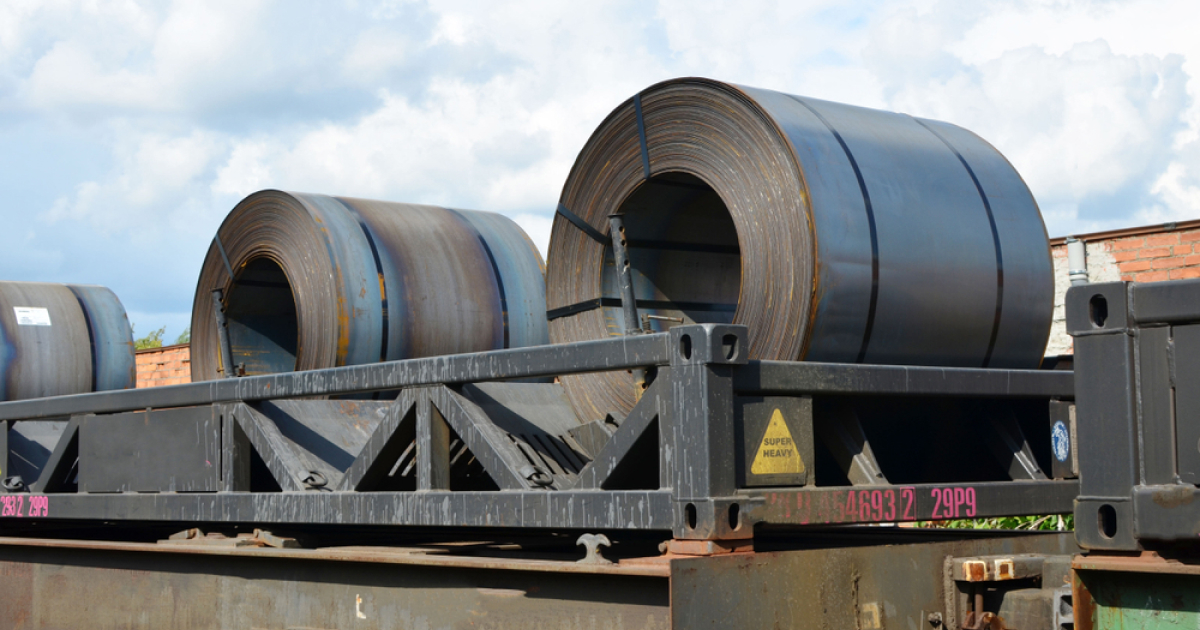
The increase amounted to $14/t and was the first since September
Baoshan Iron & Steel (Baosteel), a subsidiary of China Baowu Steel Group, is raising its list prices for hot-rolled carbon steel coil (HRC) for domestic sales in January 2026 by 100 yuan per ton ($14/t). This was reported by Mysteel Global, citing an announcement by the steel producer.
The price increase for January sales is the first since September. This decision may be explained by a reduction in production by steel mills to reduce supply, as well as an improvement in the domestic steel market.
It should be recalled that since the beginning of November, the global hot-rolled coil market has shown a predominantly upward trend. In the EU and the US, prices rose amid more stable demand and reduced supply. China, on the contrary, remained under pressure from the seasonal downturn and competition in export markets.
It was predicted that by the end of the year, the Chinese market would remain under pressure from the seasonal downturn, with a likely further price correction of $5-10/t. A slight recovery is possible only in the event of a more significant reduction in production or new incentives from the state.
As reported by GMK Center, in 2025, China may simultaneously record iron ore imports and the lowest steel production volumes in six years. Despite the fact that the country’s steel plants are cutting production due to weak demand and low profitability, purchases of raw materials continue to grow, creating conflicting trends in the market.
https://gmk.center/en/news/baosteel-raises-prices-for-hot-rolled-coil-for-january-sales/
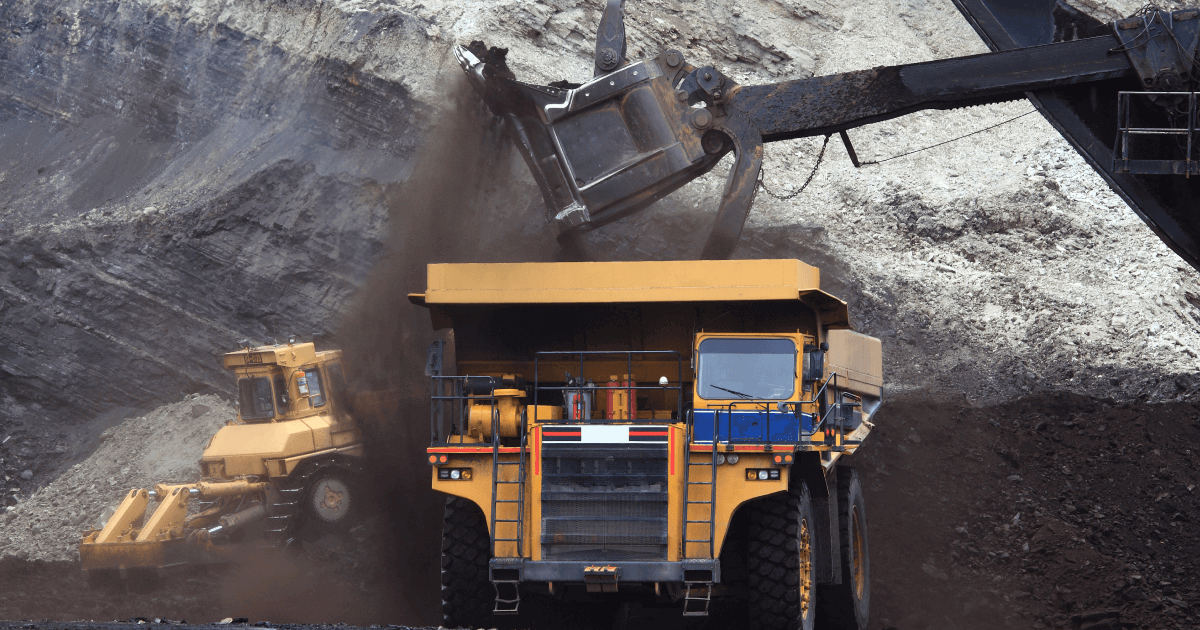
Iron ore prices are under pressure in early December 2025. At the same time, spot January contracts on the Singapore Exchange experienced a greater decline – by 2.3% over the period from November 28 to December 5, to $103.3/t, while January futures on the Dalian Exchange fell by 0.9% – to $111.12/t.
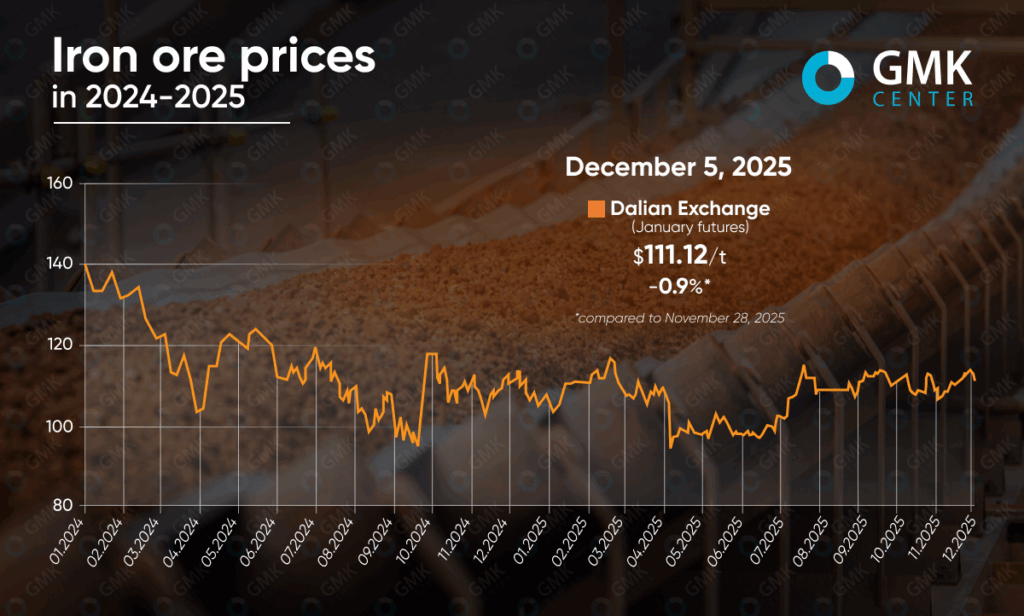
The first week of December saw fluctuations in spot prices. At the beginning of the month, the market was supported by a weak dollar and expectations of a cut in the US discount rate, which stimulated an increase in indices. However, by the end of the week, prices had fallen, reflecting pressure from limited trading activity and reduced purchases by steel mills ahead of the holidays.
Data from Chinese ports show an increase in iron ore stocks and a decline in average daily shipments, signaling weaker demand. At the same time, rebar production in eastern China has regained profitability, supporting partial price stabilization, while central China is seeing a concentration of scheduled maintenance of blast furnaces and a reduction in steel production.
Short-term market optimism is driven by expectations of economic measures in China, particularly the Central Economic Conference to be held in mid-December. In addition, the start of ore shipments from the Simandou project in Guinea has the potential to impact supply next year, although the first shipments to China are not expected until early 2026.
Seasonal factors and structural changes in steel production remain the main factors putting pressure on the market. Despite short-term fluctuations and expectations of political stimulus, the market is fundamentally in a phase of moderate weakness due to declining steel production, accumulation of stocks in ports, and limited purchasing activity by steel mills.
It should be noted that Fitch recently revised its price assumptions for iron ore for 2025-2026 upward, reflecting continued healthy global demand and higher starting prices. The average price for iron ore with 62% iron content (CFR China) in 2025 will be $100/t, compared to the previous forecast of $95/t, and in 2026 – $90/t instead of the previously expected $85/t.
https://gmk.center/en/news/iron-ore-prices-stagnate-in-early-december/amp/
Kumba Iron Ore Stock Performance
Kumba Iron Ore Ltd. stock price gapped up prior to trading on Wednesday . The stock had previously closed at $6.70, but opened at $6.99. Kumba Iron Ore shares last traded at $6.80, with a volume of 3,934 shares traded.
Kumba Iron Ore Company Profile
Kumba Iron Ore Limited, together with its subsidiaries, engages in the exploration, extraction, beneficiation, marketing, sale, and shipping of iron ore for the steel industry primarily in South Africa, China, rest of Asia, Europe, the Middle East, and North Africa. It produces iron ore at Sishen and Kolomela mines in the Northern Cape Province.
Featured
China 2024 iron-ore imports hit record on resilient demand, steel exports
BEIJING - China's iron-ore imports in 2024 rose to a record high for a second year, customs data showed on Monday, as lower prices spurred buying while demand remained resilient due in large part to massive steel exports that are inflaming trade tensions.
The world's largest iron-ore consumer brought in a total of about 1.24-billion metric tons last year, data from the country's General Administration of Customs showed, up 4.9% from 1.18-billion tons in 2023, when it posted an annual increase of 6.6%.
China's iron ore imports are also likely to hit a record high in 2025 as traders stockpile cheap ore for the world's top consumer, despite a protracted property crisis continuing to weigh on domestic steel demand.
Steel output slid by 2.7% from the year before in the first 11 months of 2024 and was on track for an annual decline, but that largely reflected weak output from electric furnace steelmakers, which supply the troubled construction sector and use scrap steel instead of iron ore as a resource.
Demand for iron-ore remained solid among China's blast furnace steelmakers, which have been able to maintain cost competitiveness.
Many electric furnace steelmakers, however, had to conduct maintenance or scale down production amid persistent constraints on scrap supply.
Additionally, traders that bought high-cost iron ore early last year continued purchasing the key steelmaking ingredient to average out their overall production costs and reduce losses, analysts said.
An increase in iron ore imports contributed to a price slump and a pile-up in portside stocks, which climbed by 28% year-on-year to 146.85-million tons as of December 27, data from consultancy Steelhome showed.
China's imported iron-ore prices slid by 31% last year, according to Steelhome data.
In December alone, China imported 112.49 million tons of iron-ore, up 10.4% from 101.86-million tons in November.
The December volume compared to 100.86-million tons in the same month in 2023.
China's steel exports hit a nine-year high of 110.72 million tons in 2024, up 22.7% from 2023, stoking global trade tensions.
A number of countries, including Turkey and Indonesia, have imposed anti-dumping duties, arguing that a flood of cheap Chinese steel is hurting domestic manufacturers.
China exported 9.73-million tons of steel products in December, up 25.9% year-on-year and 4.9% month-on-month.
China also imported 621 000 t of steel in December, bringing the 2024 total to 6.82-million tons, a fall of 10.9% from 2023.
Commodity Intelligence Comment - Tue 10:30, Jan 14 2025
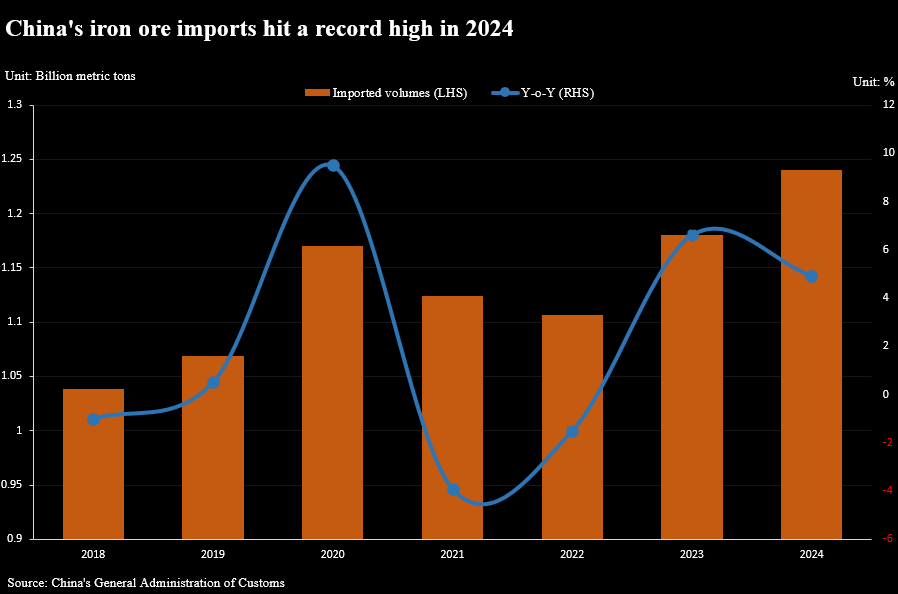
The Unsustainable Rise of China’s Iron Ore Imports: A Powder Keg of Global Consequences
China’s record-breaking iron ore imports in 2024, totaling a staggering 1.24 billion metric tons, have raised eyebrows and alarm bells across the global steel and commodities markets. At first glance, the numbers may appear to signal resilience and dominance, but beneath the surface lies an unsustainable reality. This surge in imports is not a triumph of economic efficiency or robust domestic demand but a short-sighted strategy with precarious implications for global trade, the environment, and even China’s own economic stability as it transitions to an advanced consumer/digital economy.
The below is from our November 26th webinar:
A Mirage of Demand Amid a Domestic Crisis
China’s voracious appetite for iron ore—up 4.9% from 2023 despite a protracted property sector crisis—is anything but organic. Steel output, a key barometer of iron ore demand, fell 2.7% in the first 11 months of 2024, and the annual figures are expected to show a decline. This mismatch between imports and actual production signals stockpiling, not genuine consumption. The portside iron ore stockpile ballooned to 146.85 million tons by year-end, up 28% year-on-year, according to Steelhome data. Such hoarding is unsustainable, especially when the driving force is not economic fundamentals but the need to average down costs incurred from earlier high-priced purchases. This speculative approach leaves China’s steel industry vulnerable to a future price correction, potentially wiping out already razor-thin profit margins.
Global Steel Tensions on the Boil
China’s export strategy further highlights the unsustainable nature of its iron ore imports. In 2024, the country exported 110.72 million tons of steel—a nine-year high and a 22.7% increase from 2023. These exports are flooding global markets, undercutting domestic producers in countries like Turkey and Indonesia, which have responded with anti-dumping duties. This aggressive export strategy is inflaming trade tensions and undermining global steel market stability. The U.S. and the European Union, already wary of Chinese overcapacity, will almost certainly ramp up protectionist measures in 2025 and Commodity Intelligence has carried many stories already showing that this is just about to get going ahead of Trump 2.0.
More importantly, China’s export-driven approach is a zero-sum game. By prioritising external markets over domestic consumption, the country is effectively exporting its economic vulnerabilities. Weak domestic steel demand, especially in the construction sector, indicates a structural issue that exports cannot solve. Instead of addressing the root causes, China’s policy choices are aggravating global trade disputes and risking retaliatory measures that could disrupt its iron ore supply chains.
Environmental Costs: An Unchecked Disaster
From an ESG perspective, the environmental consequences of China’s record iron ore imports are serious. Blast furnace steel production, which accounts for the majority of China’s steel output, is a carbon-intensive process. While electric arc furnaces (EAFs) offer a more sustainable alternative, they have been sidelined due to constraints in scrap steel supply and higher costs. This has led to a troubling paradox: even as China professes its commitment to carbon neutrality by 2060, its reliance on blast furnaces ensures that emissions remain stubbornly high.
Furthermore, the environmental impact is not confined to China. The surge in iron ore imports pressures mining operations in countries like Australia and Brazil, where extractive practices often lead to deforestation, habitat destruction, and community displacement. This global chain of environmental degradation underscores the unsustainable nature of China’s iron ore dependency.
Economic Risks and the Illusion of Cost Competitiveness
China’s steelmakers have long touted their cost competitiveness, but the narrative is starting to crumble. Imported iron ore prices plunged 31% in 2024, a decline that initially seemed like a boon. However, this price drop reflects oversupply and weakening global demand, not a robust economic recovery. As traders and producers scramble to lower their average costs through increased imports, they risk creating a glut that could destabilise the market. Already, the heavy reliance on stockpiling signals a speculative bubble that could burst if global demand fails to recover.
Moreover, the high cost of maintaining such large inventories, combined with escalating trade tensions, puts additional financial strain on Chinese steelmakers. With global markets increasingly wary of Chinese steel, the risk of punitive tariffs and sanctions grows. This creates a vicious cycle: rising trade barriers force China to dump even more steel at lower prices, further depressing the market and eroding profitability.
The Path Forward: Structural Reform or Chaos
China’s current trajectory is unsustainable, and the clock is ticking for meaningful reform. The country must address its over-reliance on blast furnace production and transition to more sustainable methods like EAFs. This shift will require investment in scrap steel supply chains and policies to support the domestic recycling industry. Without this pivot, China risks locking itself into a high-emissions, low-efficiency model that is increasingly out of step with global environmental and economic trends.
On the trade front, China must recalibrate its export strategy to avoid further alienating key trading partners. Instead of flooding global markets with cheap steel, it should focus on improving the quality and value-added features of its exports. This would not only mitigate trade tensions but also enhance the long-term competitiveness of its steel industry.
Conclusion: A Fragile House of Cards
China’s record iron ore imports in 2024 are not a sign of strength but a symptom of deeper structural flaws. From inflated stockpiles to unsustainable export practices, the current strategy is a house of cards poised to collapse under the weight of economic, environmental, and geopolitical pressures. For commodity investors, the lesson is clear: the numbers may look impressive, but the foundations are shaky. As global trade tensions rise and environmental scrutiny intensifies, the sustainability of China’s iron ore and steel juggernaut is more uncertain than ever. The time for China to act is now, or the costs—both economic and environmental—will only escalate.

India and Sweden announced seven joint projects to reduce carbon emissions in the steel and cement sectors, with funding from India’s Department of Science and Technology and the Swedish Energy Agency.
The initiatives under the LeadIT industry transition partnership involve major Indian companies, including Tata Steel, JK Cement, Ambuja Cements, Jindal Steel and Power and Prism Johnson, working alongside Swedish technology firms Cemvision, Kanthal and Swerim. Leading Indian institutes such as IIT Bombay, IIT-ISM Dhanbad, IIT Bhubaneswar and IIT Hyderabad are also participating.
The projects will conduct pre-pilot feasibility studies on technologies, including hydrogen use in steel rotary kilns, recycling steel slag for green cement production, and AI-based optimisation of concrete mix designs. One project will explore converting blast furnace carbon dioxide into carbon monoxide for reuse, while another will assess electric heating methods for steel production.
India’s steel sector contributes 10-12 per cent of national carbon emissions, while cement accounts for nearly 6 per cent. Heavy industry globally represents about one-quarter of greenhouse gas emissions and uses one-third of world energy.
The partnerships aim to develop scalable low-carbon technologies supporting India’s net-zero target by 2070. Tata Steel and Cemvision will examine converting steel slag into construction materials, creating what they describe as a circular value chain for industrial byproducts.
Published on December 9, 2025
Dec 10, 2025 18:01
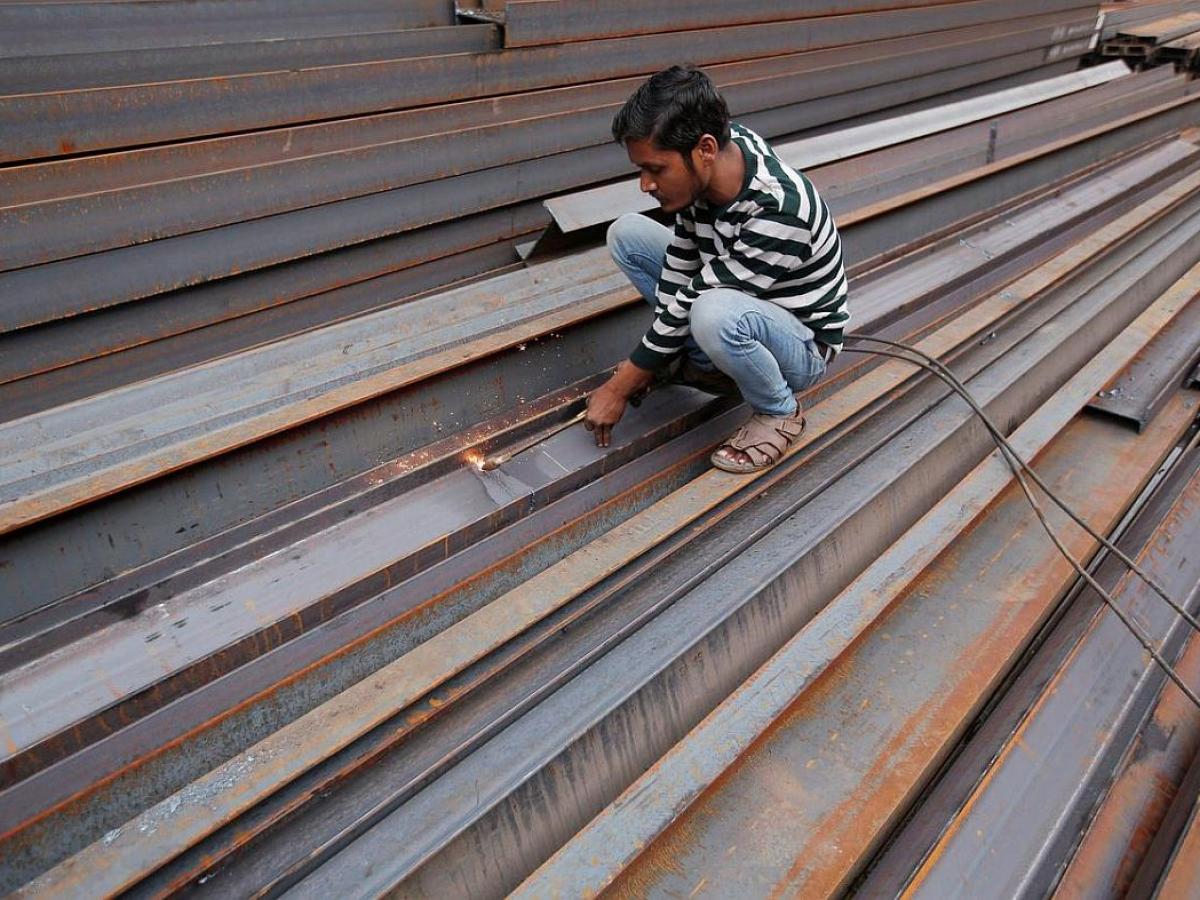
Tata Steel signs agreement to acquire majority stake in Thriveni Pellets. Acquisition to bolster raw material supply chain.
New Delhi, Dec 10 (PTI) Tata Steel has entered into a pact to acquire a majority stake in Odisha-based Thriveni Pellets Pvt Ltd (TPPL), according to a company statement.
The acquisition is set to bolster Tata Steel's supply chain, especially in the crucial sector of raw materials.
TPPL owns 100 per cent stake in Brahmani River Pellet Ltd (BRPL), which operates a 4 million tonnes per annum pellet plant in Jajpur, Odisha along with a 212 km slurry pipeline.
"Tata Steel has also signed a definitive agreement to acquire a 50.01 per cent stake in Thriveni Pellets Pvt Ltd," the statement said.
The balance 49.99 per cent stake in TPPL is held by Lloyds Metals.
Lloyds Metals said in the statement that this pact is, however, subject to regulatory clearances.
Lloyds Metals and Energy Ltd said it has entered into a pact with Tata Steel Ltd to explore strategic partnership in raw material mining, logistics, pellet and steel making.
The proposed partnership aims at utilising the natural synergy in the business operations between Lloyds Metals and Tata Steel.
The MoU sets out a framework for both companies to evaluate potential cooperation in greenfield steel making projects, iron ore mining, slurry pipeline infrastructure, pellet making in iron ore rich states, direct reduced iron production and exports of value-added low carbon iron and steel products among other associated areas of mutual interest.
The objective is to utilise the complementary strengths of Tata Steel and Lloyds Metals to promote sustainable and efficient growth in the domestic steel sector, it said.